
CASTABLE SONAR · SHORE, KAYAK & BELLY BOAT
What Does a Deeper Fish Finder Really Do for You on the Water?
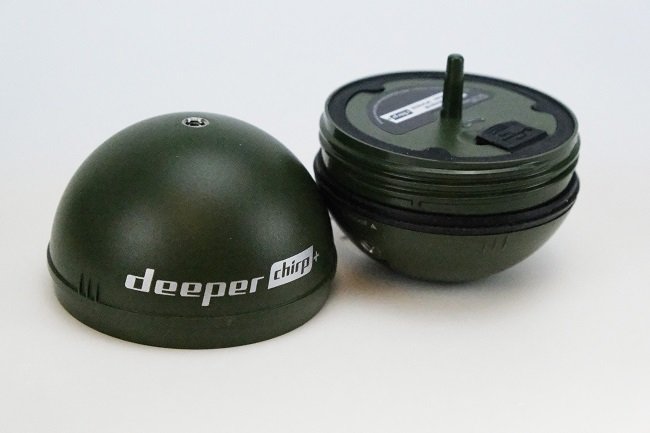
Deeper sonars are among the devices that have changed shore fishing. You can cast them, use them on a kayak or belly boat, and map structure without having to drive a large boat over the spot. The previous guide rightly focused on exactly this point: For the first time, shore anglers can quickly get a picture of what is happening below the surface.
However, that does not mean a screen simply tells you where the next pike, perch, or zander is holding. A Deeper measures sound echoes. Only when combined with the body of water, season, forage, and fish behavior does this become a useful decision: Which drop-off is worth another cast? Where does the vegetation end? Which depth or transition is even plausible today?
What Is a Deeper Smart Sonar, and What Information Does It Provide?
The Deeper family is developed by Deeper UAB in Lithuania. The basic idea remains the same: The device is the transducer, and your smartphone or tablet is the display. This makes it portable—from shore, in a belly boat, on a kayak, or while exploring a new body of water.
A Deeper is especially useful when you start with the water rather than the lure question. You can search for holes, plateaus, channels, drop-offs, underwater humps, and hard-to-soft bottom transitions. With suitable models and settings, survey runs or casts can be combined into your own depth maps. This information does not replace knowledge of the water, but it shortens the period of trial and error.
Important context: Fish icons and arches are indicators, not species identification. Several small fish, vegetation, or an unfavorable angle can look similar. Therefore, use the Deeper first to narrow down areas—not to declare a single pixel a definite target fish.
How Do You Use a Deeper to Find Fishing Spots Systematically?
A Simple Process for Your First Body of Water
- Define the question: Are you looking for a drop-off, transition, channel, or an area in front of the vegetation?
- Cast in a fan pattern: Do not cast only straight ahead; systematically cover the left, center, and right.
- Retrieve slowly and steadily: Only then will you get a useful contour instead of a frantic snapshot.
- Verify anything notable: Rescan a transition from two directions.
- Mark it and fish it: Only then do you select the lure, presentation, and casting angle to match the situation.
The previous article emphasizes a safety rule that must remain: Check knots, snaps, and line before casting. At the time, the manufacturer tested the devices with monofilament line rated from 2.7 kg and braided line rated up to 9 kg. More important than a fixed number is the practical reality: Damaged or abraded line poses a real risk of losing a castable sonar during the cast. Use a secure attachment point and also follow the current instructions for your model.
The more often you view the same area from different angles, the better you can interpret it. On a river in particular, a groin, depression, or current seam may only become clear when considered together with the retrieve direction. On a lake, contour lines and transitions help narrow the search area for perch, zander, pike, or carp.
Which Deeper Model Is Right for Your Fishing?
The original article covered the START, PRO/PRO+, CHIRP+, and CHIRP+ 2 in detail. The product family has continued to evolve since then. We will therefore distinguish between timeless practical knowledge and a current purchasing decision: Older tests remain available as genuine experience reports; before buying, always check availability, prices, included accessories, and app features with the manufacturer or retailer.
Basic Shore Exploration
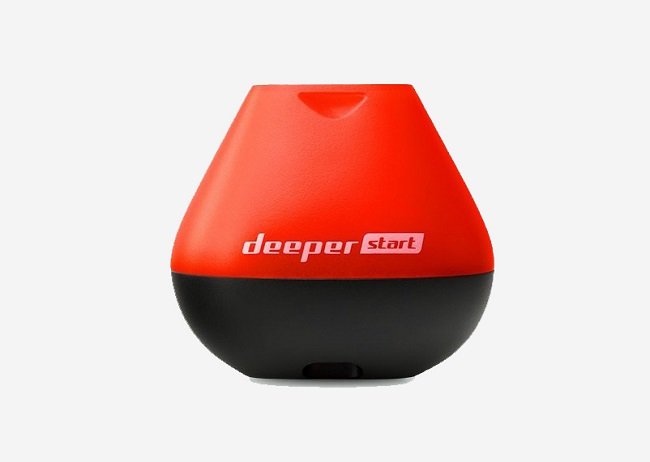
Entry-level devices such as the Deeper START are designed for manageable shore searches: depth, bottom profile, vegetation, and initial fish indicators. They are a good choice if you do not want to create maps or delve deeply into settings.
Mapping Your Home Waters
GPS-capable models from the PRO+ line have been and remain of interest to anglers who want to record casts or trolling runs as map data. Their value lies in repeatably locating drop-offs and routes, not in having an attractive map alone.
Comparing Details More Precisely
CHIRP models use multiple frequency ranges or sonar beams. This helps you compare coverage, detail, and depth more precisely—provided you can then interpret the display correctly.
Bait Boat, Kayak, or Belly Boat
For these uses, range, battery life, attachment, connectivity, and mapping often matter more than any single advertised feature. Plan the entire system: device, app, mount, power, and secure installation.
In the original test, the Deeper CHIRP+ 2 was the clear top recommendation because it combined three sonar beams with long battery life. That assessment remains valuable as a practical verdict on the model at that time. However, it should not be the sole basis for a purchase in 2026: Today's product range includes newer generations and varies by market. Our new individual reviews therefore always assess whether the specific benefits for your everyday fishing genuinely justify the added cost.
Why Does Image Interpretation Determine the Value of Your Deeper?
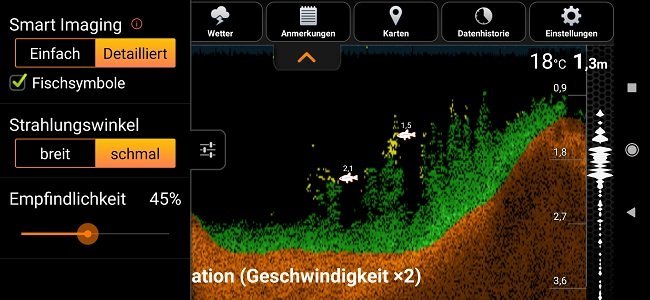
A narrow cone provides more detail in a smaller area. A wide cone covers more area but also combines more water and possible signals. That is precisely why the question “When should I use which sonar beam?” is not a minor detail. It determines whether you begin with a broad search or systematically examine a notable area.
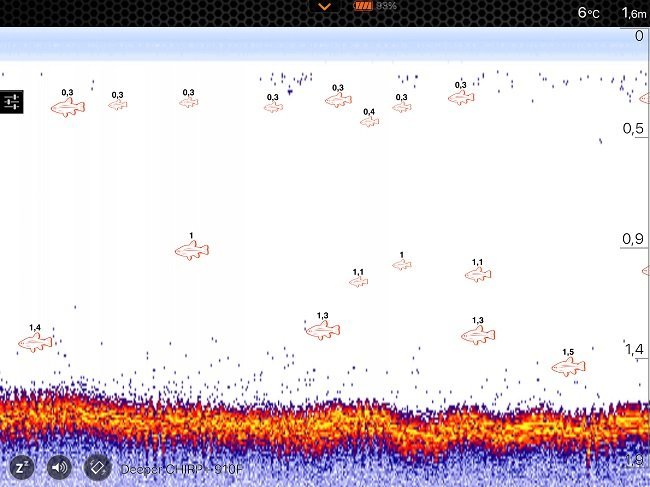
Start deliberately simple: Compare the bottom line, observe how it changes, and focus on structure. Once you understand the relationship between the image and the water, fish signals, temperature, and the map provide additional help. This turns the Deeper from a toy into a tool for making better decisions before the first cast.
Which Deeper Articles Can Help With Your Next Step?
Conclusion: Spend Less Time Searching and Fish Based on Better Information
This article retains the core content of the previous Deeper guide: how it works, its benefits, preparation, fan-shaped scanning, line safety, and an assessment of START, PRO, and CHIRP models. Outdated model and price information was not carried forward as current purchasing advice; it is transparently contextualized in the individual review articles.