
UNDERSTANDING WATER · THE DAY'S CONDITIONS
How Do Wind, Light, and Water Color Change Your Fishing Spot?
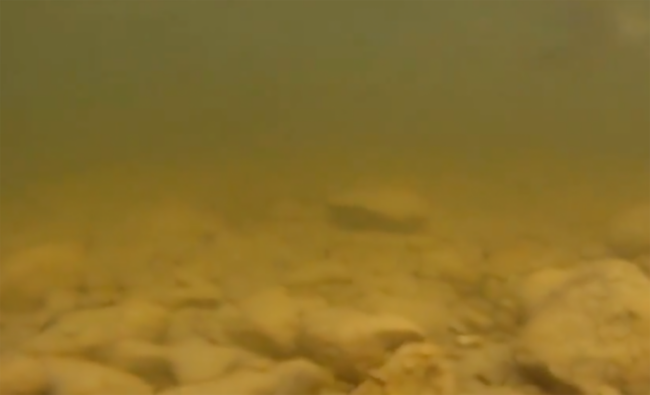
Why do wind, light, and water color change how you search for fish?
The map shows you the shape of the body of water. But on the day you fish, changing conditions determine which of these features will most likely hold fish. Wind can push water toward one side, create waves, and redistribute food. Sun or clouds change light levels above and below the water. Turbidity can result from rain, wind, algae, inflows, or disturbed bottom sediment. None of this changes fish location according to one simple rule—it changes the questions you use to assess the spot.
A clear, calm morning at a gravel pit lake calls for a different search than the same lake after two days of wind. A shallow bay may warm up, but it may also be too turbid, too shallow, or simply empty. A windblown drop-off may concentrate food, but it may also push fish toward a nearby sheltered feature. That is why “the windward side always produces” is just as useless as “go deep in the sun.”
Start with the model of the water: Where are the drop-off, vegetation, channel, bay, and open water? Then assess which of these zones might offer an advantage today. You can find the mapping approach in Reading Contour Lines and the function of a feature in Drop-Offs and Transitions.
What can wind change on a lake or river?
On larger lakes, sustained wind often creates a clear difference between the windward and leeward sides. Surface material, insects, plankton, and small fish may collect along the windblown shore. Waves break up light, make the surface rougher, and can provide fish with cover. That is a good reason to check the windward side—not a reason to treat it as gospel.
The connection is what matters. A windy, shallow bay without depth or cover can be difficult. A windward side with a weed edge, incoming channel, or adjacent plateau offers many more possibilities: Prey can be pushed into the shallower area, while predators may hold along the edge or adjacent drop-off. So do not fish only in the middle of the waves. Check the entrance, vegetation line, base of the drop-off, and the calmer side behind a feature.
Strong wind can make a small body of water read completely differently. It stirs up shallow shorelines, makes lure control more difficult, and changes casting direction. Safety comes first: Wind, waves, thunderstorms, boats, the shoreline, and local regulations determine whether an area can be fished at all. Current is another factor in rivers. There, the windward side is not the main model; the transition between current, eddies, and calmer water is.
How does light change potential depth and activity?
Underwater brightness is not simply “day or night.” Shallow water, clear visibility, sun angle, cloud cover, shade, waves, and suspended particles create different windows of light. Prey fish may seek cover along a drop-off, in vegetation, or at a shade line. Predators use these boundaries when they expect prey there. In clear water, a steep drop-off, overhanging tree, or outer edge of a weed bed may be more productive on a bright day than an open area.
Twilight is not an automatic feeding signal either. It changes visibility and activity, but the best area remains the one where prey, cover, and travel routes align. So do not consider only the time of day. Watch whether small fish move shallower, whether surface activity develops, or whether the same areas remain quiet as they were during the day.
For lure selection, this means first determining the reachable depth and retrieve, then contrast and size. A perfectly colored lure running above the prey or too quickly over the drop-off does not solve the location problem.
What does water color tell you about the water?
Brown, tea-colored water may be caused by humic substances. A greenish tint may be associated with algae. After rain, wind, or heavy boat traffic, stirred-up sediment can temporarily reduce visibility. A milky, turbid area at an inflow may bring in food, but it may also carry very cold water, pollutants, or strong current. Color alone therefore does not tell you where the fish are holding.
Instead of “turbid = flashy,” ask: What is the cause, and what does it change in this zone? Is the area shallower and therefore warmer? Is there a drop-off leading outward? Is there cover, calm water, or small fish? Can you compare a clearer area with a more turbid one? These are hypotheses you can test on the same day.
Water color can also vary within a lake: The windward side, a bay, an inflow, and the open middle do not look the same. Always record visibility depth or a simple visibility check together with the location and weather. After several visits, you will recognize whether your water develops different feeding zones at certain turbidity levels.
How do you effectively adapt visibility, lure height, and presentation?
Reduced visibility does not mean color no longer matters. But it is only one of several signals. A lure can stand out through contrast with its surroundings, its silhouette, vibration, pressure waves, and an appropriate speed. What makes sense depends on depth, turbidity, current, and target species. So do not change everything at once.
Use this order: First, the search area and depth. Then casting angle and retrieve. Only after that, lure size, profile, and contrast. In turbid water, a controlled, slightly longer retrieve along the drop-off may be more effective than a fast pass far above the bottom. In clear water, a smaller, more natural presentation may fit—provided the lure reaches the prey zone. That is a decision to make on the water, not from a color chart.
With a soft plastic, a deliberate hop or brief pause only helps if it keeps the lure in the right window. A large, fast movement can pull it out of the zone. Check whether the rod tip, weight, and angle actually give you control, especially in a crosswind or current.
What does this mean for perch, pike, and zander?
Perch may follow prey along vegetation, drop-offs, or in open water. In wind, it is worth checking not only the shoreline but also the depth of the baitfish and the edge of the school. The perch cluster helps you apply this: Fishing for Perch.
Pike use cover and windows of visibility. A windblown, turbid weed edge can be just as promising as a clear transition with a good view of prey—provided hunting space and a retreat area align. The appropriate starting point is Where Do Pike Hold?.
Zander in rivers or lakes are too often reduced to “low light.” What still matters is whether they use a baitfish route, a hard transition, a suitable depth, and an energetically efficient location. Read the conditions together with the structure, as described in Zander Hotspots.
Which rules about fishing in wind and turbid water are too simplistic?
- Windward side without a connection: Check whether prey is actually being held there and whether a drop-off, cover, or deep water is accessible.
- Water color without a cause: Turbidity may mean food, but it may also be nothing more than stirred-up mud without fish.
- Light without structure: Shade or twilight does not help if the area offers no prey or retreat space.
- Contrast before location: A lure does not become more visible when it runs at the wrong depth.
- Only one spot: On the same day, compare a windy zone, a sheltered zone, and a transition zone. That tells you more than your impression after one cast.
How do you perform the 5-minute check before your first cast?
- Read the wind: Note direction, strength, duration, and sheltered and windblown areas.
- Compare the water: Check color, turbidity, waves, and visible activity along at least two sections of shoreline or water.
- Connect structure: Which drop-off, vegetation line, bay, or channel lies in today's notable areas?
- Find prey: Read small fish, insects, birds, surface signs, or sonar in context rather than in isolation.
- Test depth: Deliberately compare not just the spot, but shallow water, the depth of the drop-off, and deeper water.
- Change one variable: First location or depth, then angle/retrieve, and finally lure profile and contrast.
Wind, light, and water color are neither an excuse for a bad day nor a promise of a good one. But they help you turn a map of the water into a fishing day in motion: Where does the opportunity change today before you make your first cast?
Sources and adaptation: This article expands the existing content about spring pike, wind, visibility range, and water color. The original graphic was taken from the previous spring pike article. Specific lure colors are deliberately not presented as universal recommendations; they always come after location, depth, and retrieve.