
Carp Fishing · Behavior and Seasons
Carp Spawning Season: When Do Carp Spawn and Where Are They?
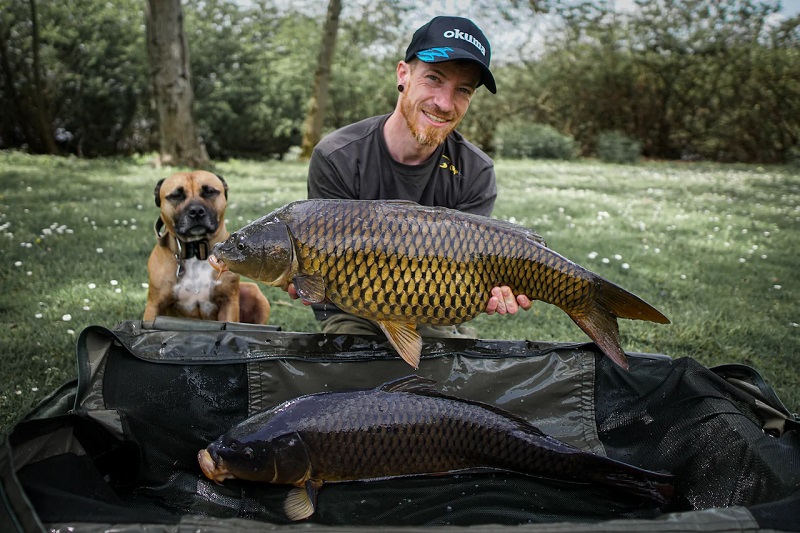
When does carp spawning season begin?
A shallow pond can develop very differently after a warm week than a deep gravel pit lake. A cold inflow, nighttime frost, fluctuating water levels, or a lack of submerged vegetation can slow development. At the same time, a sunny, wind-sheltered bay may already be much further along than open water. That is why the question “Do carp spawn in May?” is too broad. A better question is: Where has the water warmed consistently, what vegetation is accessible, and how are the fish behaving?
As a practical guideline, carp become considerably more active in spring as temperatures rise. Actual reproduction, however, requires more than just one warm afternoon. Temperature trends, light, spawning substrate, and the condition of the fish all need to align. Even within one body of water, spawning may not begin along every shoreline at the same time.
So do not rely solely on a thermometer. Over several fishing days, record the water temperature, wind, water level, turbidity, and the locations where you see fish. This will help you identify patterns instead of following a supposedly fixed spawning formula. The article Where Are Carp in Spring? helps with the preceding step: assessing the first warm areas, food sources, and travel routes.
How and where do carp spawn?
The typical scene is turbulent water in a reed bed or weeded area: Fish roll close together, push into the vegetation, break the surface with their backs, or create noticeable splashes. This is not ordinary feeding activity. Several males usually accompany one female. The fish do not seek out this structure by chance: Plants, roots, or other solid surfaces give the eggs something to adhere to.
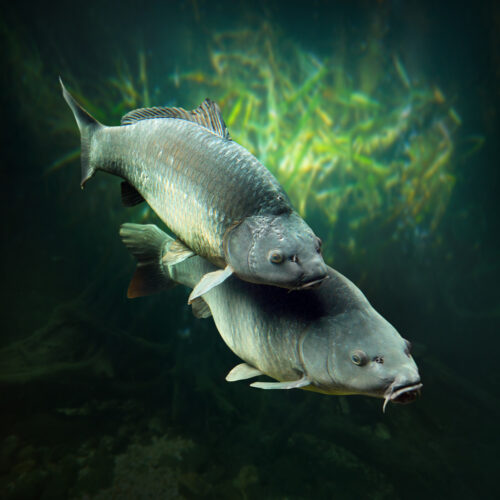
Many carp spawn only once during the course of a year. However, how long the activity remains visible depends heavily on the weather, water temperature, water level, and the body of water. A cold snap can interrupt the process; in large bodies of water, individual groups may become active at different times. Therefore, the commotion observed in one location does not automatically mean that all the lake's carp are there.
This distinction is important for fishing: Visible fish answer the question of where carp are at that moment. They do not reliably answer the question of where they are feeding or which bait they will take later. Anyone who wants to find fish must read their behavior—not interpret every concentration of fish as a catch opportunity.
What spawning grounds do carp choose?
A spawning ground is more than just “shallow and warm.” A bay becomes suitable only through a combination of access, appropriate structure, and a nearby refuge. Reed edges, weedy bays, flooded margins, and sheltered side channels are therefore more promising than a completely bare shallow flat. Where vegetation is absent, roots, branches, or other solid structures may also play a role.
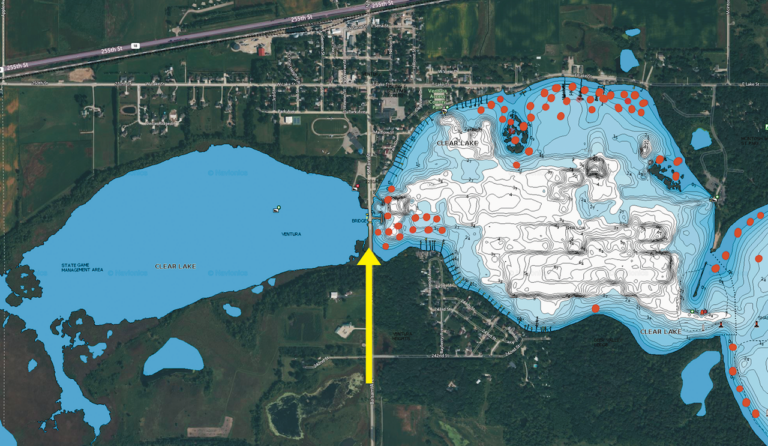
Look at the area as a system: Where does the vegetation begin? Does a small channel or drop-off lead into the shallow water? Which side warms first? Where does the wind deposit natural material? And where can the fish retreat if it cools down at night? These questions are more helpful than simply searching for the densest weed bed.
On a depth chart or with sonar, you can identify transitions between shallow and deep water. However, the device cannot show whether a carp is currently feeding, resting, or spawning. A conclusion can only be reached by combining the map, observation, season, and behavior.
How are river spawning grounds different?
In rivers, quiet side channels, oxbow lakes, flooded areas, sheltered bays, and slow-flowing shoreline zones are often more relevant than the main current. Carp must be able to reach spawning grounds without continuously expending a great deal of energy against the current. At the same time, flooding, turbidity, and water levels can change these areas quickly.
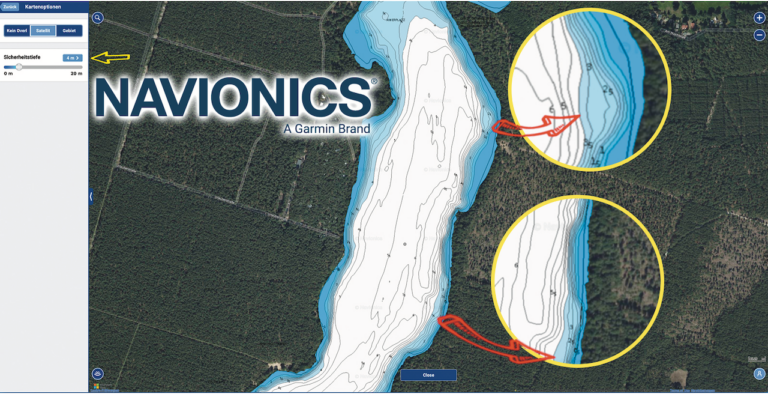
Do not automatically apply a finding from a lake to flowing water. Instead, look for the combination of calm water, accessible vegetation, and a refuge area. For the basics of locating carp in rivers, see the separate article Where Are Carp in Rivers?.
What do carp eggs and development look like?
The eggs are small and sticky. This adhesive quality is precisely what makes vegetation so important as spawning substrate. Depending on her size and condition, a female can lay a great many eggs—large numbers are involved, not merely a handful of individual eggs. Nevertheless, only a small proportion of the offspring later become adult carp: Water level, temperature, oxygen, predators, and the availability of cover play major roles during the initial stages of development.
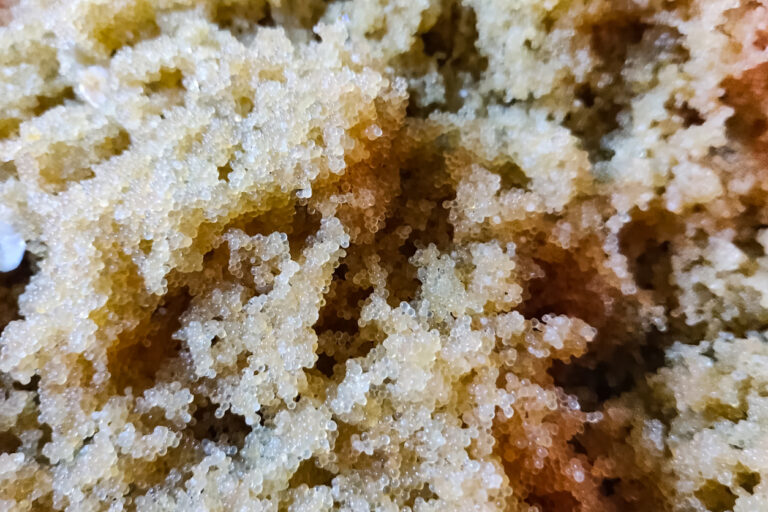
Development from egg to juvenile fish does not follow a rigid timetable. Under suitable conditions, the early stages can progress quickly, while cooler water slows them down. The key is therefore not to search for a universal date, but to consider temperature, stable water levels, and sheltered shallow-water areas.

Where are carp before spawning season?
As the water warms, winter groups often disperse. Dark bottom, wind-sheltered bays, shallow weed beds, inflows, and the drop-offs in front of them then become more important. Above all, the connection matters: In a bay, carp can find natural food, warm up, and quickly move into deeper water if disturbed.
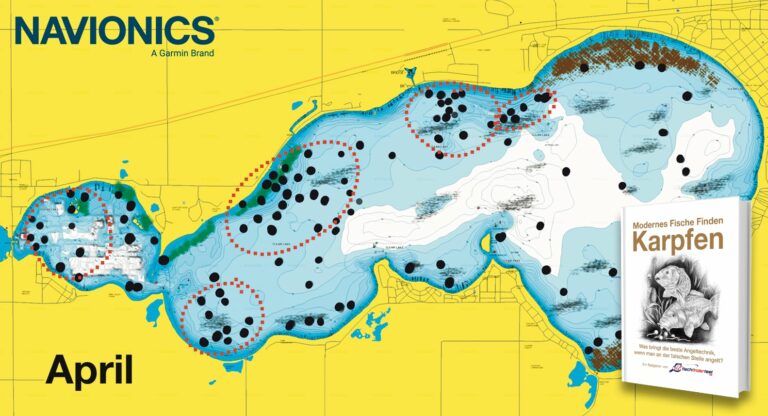
Watch for recurring signs: bubbles over soft bottom, traveling fish, disturbed areas, or a shoreline that carp visit repeatedly. However, a single fish at the surface does not prove that all the fish in the body of water are concentrated there. Always check the nearest drop-off or adjacent feeding area as well.
What does visible spawning activity mean for anglers?
The actual spawning phase can look spectacular: lots of movement, splashing, and fish pushing into the vegetation. This is precisely why it can be tempting to fish the spot immediately. From both a professional and ethical standpoint, however, the better response is to assess the situation. Carp are not necessarily concentrated there because of food; they are engaged in reproduction.
Before every fishing trip, check your permit, the fishery regulations, local restricted areas, and applicable closed-season and conservation rules. These rules vary by federal state, body of water, and fishery manager. If a spawning area is protected or closed, it remains so—even if the largest carp are visible there.
Good location work does not end when you find a fish. It also includes deciding to leave a spot undisturbed, releasing fish carefully, and avoiding damage to the habitat by entering vegetation zones or creating unnecessary pressure.
Where are carp after spawning season?
After reproduction, carp need rest and food. Some move back and forth between the vegetation zone and the nearest drop-off, while others travel considerably farther. Mussel beds, soft bottom, natural food, overhanging vegetation, or scoured transitions may then become more important than the warmest shoreline area.
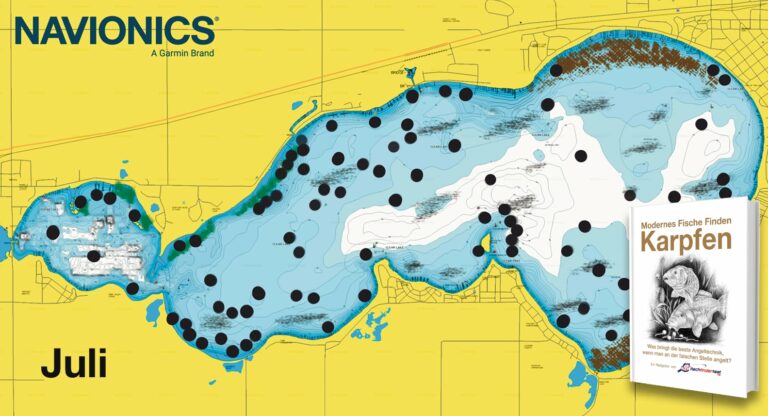
After spawning, look for three connections: first, the former spawning zone; second, the nearest area with natural food; and third, the deeper refuge water. Do not test everything at once. If you record temperature, depth, time, and activity, you will more easily recognize why an area works or does not.
How should you act responsibly during carp spawning season?
- Check temperature trends rather than the date: Record the temperature, weather over the past few days, wind, and water level.
- Identify spawning structure: Map reeds, weeds, water lilies, flooded margins, and calm river zones.
- Find access and refuge routes: The drop-off, channel, or deep water behind the shallow area is also part of location analysis.
- Read behavior: Do not equate spawning activity, rooting, and searching for food.
- Put conservation rules first: Permit conditions, fishery regulations, and local closures always apply.
- Search again after spawning: Check feeding zones and refuge areas instead of blindly baiting the former spawning ground.
The crucial question before the first cast is not: “Which bait catches carp during spawning season?” Instead, ask: “What condition explains why a carp might be in this exact spot today—and am I even allowed to fish there?” Only once this question has been answered properly do bait, location choice, and the amount of feed become conscious decisions.
For the next step, see the basics in the article How to Bait for Carp Properly and all previous articles in the Carp Overview.
Source material and image attribution: This article was developed from the existing WordPress post on carp spawning season and Modern Fish Finding—The Carp. Each of the eight illustrations comes from the original spawning-season post and has been placed here in the corresponding topic section. Temperature and time information represents trends in bodies of water, not universal rules. Before fishing, check the closed seasons, protected areas and fishing rules that apply to your location and chosen water.