
Carp fishing · Spring
Carp Fishing in Spring: Where Are Carp Holding and Which Bait Works?
What changes first in spring?
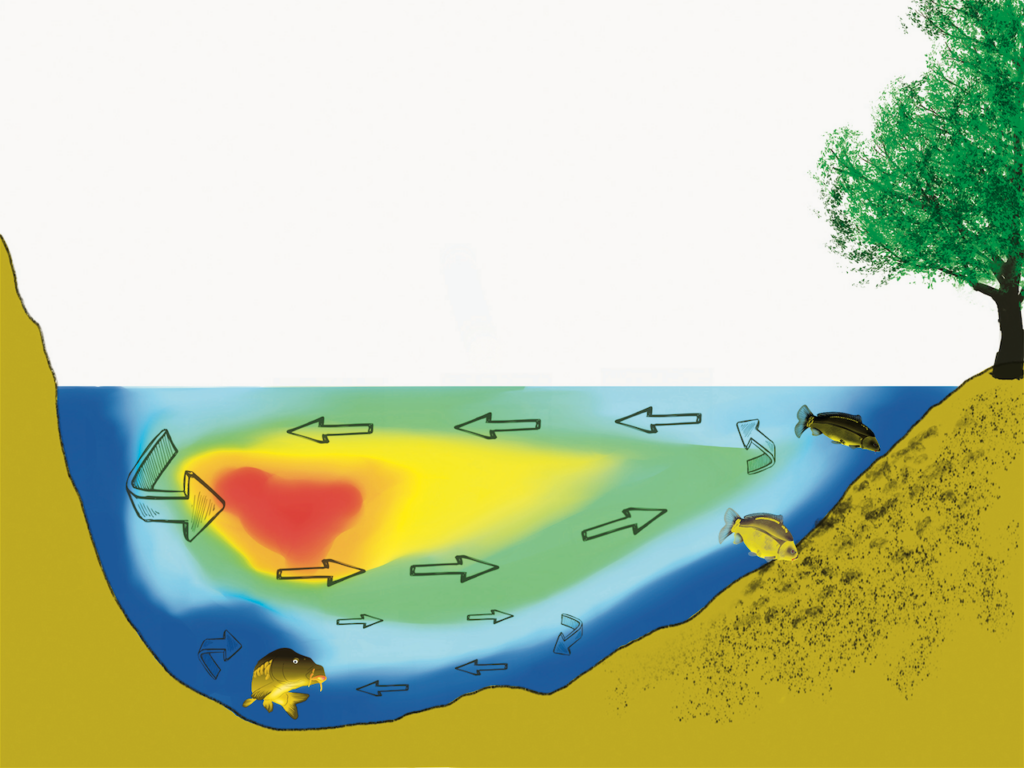
After winter, many waters begin with very low temperatures. Carp often hold closer together and move very little. Various studies identify a water temperature of 5 °C as a significant threshold: Once it is exceeded, activity can increase sharply. Winter groups gradually break up, and individual fish make short excursions—sometimes only a few meters, sometimes several hundred.
This is not a magic formula for catching fish. A deep gravel pit, a shallow pond, and a slow-flowing oxbow respond differently. Measure the temperature in several places whenever possible and observe the trend over several days. Between about 5 and 9 °C, searching small areas is often worthwhile; as the water warms further, larger areas become accessible.
As temperatures rise, light, oxygen, plant growth, and bottom-dwelling prey come together. Carp can then move into shallow zones without staying there permanently. A nearby drop-off or channel is therefore just as important as the warm area itself.
Where do carp hold in spring?
Shallow, sunny banks: They warm faster than deep basins. A dark bottom, sheltered bay, or bank with little wind may offer a temperature advantage by afternoon. Check whether the fish can move directly from there into deeper water.
Shallows and plateaus: If the bank drops steeply or is heavily fished, carp may use an underwater plateau. The edge, shallow top, and transition to the next deeper area are especially promising. A plateau is not automatically a feeding spot; its location along a travel route is what matters.
Windward bank and food input: Wind can push warm surface water and organic material toward a bank. A cold wind can make the same area unattractive. Therefore, assess wind direction, turbidity, and temperature together instead of simply checking off “wind blowing onto the bank.”
Vegetation and dead weed: Insect larvae and other small creatures live among plant debris. In early spring, areas of dying vegetation are often more valuable than newly dense growth. A pop-up presentation above the weed can stand out without requiring you to disturb the entire weed bed.
Rivers, canals, and ditches: In flowing waters, carp often seek slower or nearly still areas: eddies, bays, harbor zones, oxbows, and areas behind current seams. A separate river article will follow within the topic structure; there, location depends more heavily on water level and current.
Sand and silt can also contain food. Carp root along the bottom when larvae, worms, snails, or other bottom-dwelling organisms are present. What matters is not whether the bottom looks appealing, but whether carp can find food there and reach the zone without expending much energy.
What do carp eat in spring?
After winter, rising food requirements coincide with a food supply that is not yet fully developed. Flora and fauna emerge gradually. In shallow areas, carp may therefore search for bottom-dwelling prey and early plant growth at the same time.
Insect larvae: Bloodworms, mayfly nymphs, and caddisfly larvae are important animal food sources. They live in sediment, among plant debris, or along weed edges. Their availability often explains why a carp roots around a few meters from an apparently identical patch of bottom.
Small crustaceans: Water fleas, scuds, and other plankton provide protein. Where these organisms occur, carp may also rise into midwater or among plants. However, a fish at the surface is not automatically feeding—look for repeated appearances and observe its behavior.
Snails and mussels: They are energy-rich bottom prey. Mussel beds, hard transitions, and spots with visibly altered bottom deserve special attention. Sonar can show the structure; only the fish's behavior reveals whether they are actually feeding there.
Plant matter: Young shoots, algae, duckweed, water lily leaves, and other plant material can play a role. Carp do not utilize plant matter equally well everywhere. Therefore, “carp eat plants” is too broad to serve as a location rule on its own.
The carp book also explains detritus: dead organic material that accumulates on the bottom and is colonized by microorganisms. To carp, this area is not simply “dirt,” but part of a food chain. Look for the actual organisms there, not just the visible silt.
Which bait works in spring?
Corn is visible, provides starch, and can create a clear contrast in murky water. In one comparison, cooked corn was taken slightly more readily than untreated corn. That is a tendency, not a guarantee for every fish population and amount of feed.
Pop-up boilies can be useful in early spring when the bottom is covered with plant debris. The bait sits slightly above the sediment and remains conspicuous. Pay attention to the rig's buoyancy, the height of the weed, and a presentation that does not float unnaturally above the actual feeding zone.
Animal-based signals: Depending on the water, pellets or boilies containing animal ingredients may better match the available food in spring. Bloodworms are an important natural reference point. This does not mean every strongly fishy flavor is better. The bait must be accessible, offered in a measured amount, and placed in the right location.
Boilie size: In cold water, do not automatically start with the largest bait. A small, subtle bait may make more sense when there are few fish and little activity. Larger baits may offer advantages later or when many fish are present—the decision should follow the situation, not a blanket rule based on the month.
The rig remains a tool. A perfectly tied rig will not catch if the carp are feeding along the next drop-off. First assess location, prey, and depth, then bait type and hook size.
How much should you prebait?
A limited baited area can help if you have found a likely travel route or feeding area. If activity fails to materialize, first change the position, depth, or time of day instead of simply adding more feed. This helps determine whether the spot was wrong or the amount was too small.
For a short session, a few precisely placed particles or boilies are often enough. A PVA bag can keep feed and hookbait together in a compact package if the bottom and water depth permit. For a multi-day baited spot, the amount must be tailored to the fish population, temperature, and natural food supply.
The detailed study on amino acids and the limitations of such attractant trials are covered in the article How to Prebait for Carp Properly. The key point remains: Feed extends the benefits of a good location decision, but does not replace it.
When do carp bite in spring?
Referring to the month is only a rough shortcut. Temperature, weather over the previous few days, spawning preparation, and the size of the water also matter. In small waters, afternoon sun can warm individual areas by one or two degrees. This sometimes creates a short feeding window.
In general, late afternoons, evenings, and early nights are often more productive in spring than cool mornings. This does not apply to every water: Cloudy weather, strong wind, or a drop in temperature can shift the window. Observe the conditions and keep a catch log.
Energy requirements may rise before the spawning season. When spawning activity is evident, protection and quiet take priority over catching fish. Details on spawning areas, behavior, and regional regulations are available in the article Carp Spawning Season.
Which tactics work on the water?
- Read the temperature: Note the trend over recent days, sunshine, wind, and inflows.
- Mark the warm zone: Select a shallow bay, sunny bank, plateau, or windblown area.
- Find deeper water for retreat: Check for a drop-off, channel, or deeper water directly beside the feeding zone.
- Look for food: Watch for weed debris, mussels, silt, sand, bubbles, and disturbed bottom.
- Start small: Offer bait and feed precisely; avoid large amounts without confirmed activity.
- Test one factor at a time: Change the position first, then the depth, then the bait or additive.
- Allow for patience: At 9 °C, carp may remain lethargic despite being in a suitable spot.
The biggest spring mistake is changing the bait before checking the location. The second biggest is treating a single sighting as proof. A feeding spot is indicated by recurring activity, not a random patch of bubbles.
What questions arise about spring carp?
Which month is best for catching carp in spring?
Use the month only as a rough guide. Water temperature, food supply, and local regulations are more important. Assess the specific water and do not transfer productive times from another lake.
What is the best time of day for carp fishing in spring?
The best time results from daily warming and carp movement patterns. Record when you see activity or catch fish instead of relying solely on a general time.
How large should the bait be in spring?
A small bait is not automatically better. What matters is whether it is presented cleanly and suits the situation. Pop-ups may offer advantages in weed; larger baits can be more selective when fish are feeding actively.

More than a bait list
Modern Fish Finding—The Carp combines season, water, food, and behavior so you can narrow down the most likely spot before the first cast.
View the carp book later → (German-language edition; English edition coming soon)The complete topic structure is available in the Carp Overview. For the spawning phase, read Carp Spawning Season; for feed additives, see the scientifically expanded article How to Prebait for Carp Properly.
Source basis: Revised version of the existing WordPress article Carp Fishing in Spring, supplemented and evaluated in context using Modern Fish Finding—The Carp. Statements about temperature, baits, and feeding times are tendencies observed across waters, not a guarantee of catching fish. Before fishing, check the closed seasons, protected areas and fishing rules that apply to your location and chosen water.