
FINDING ZANDER · SPRING
Where are zander in spring—and how do you find the right starting point outside the spawning season?
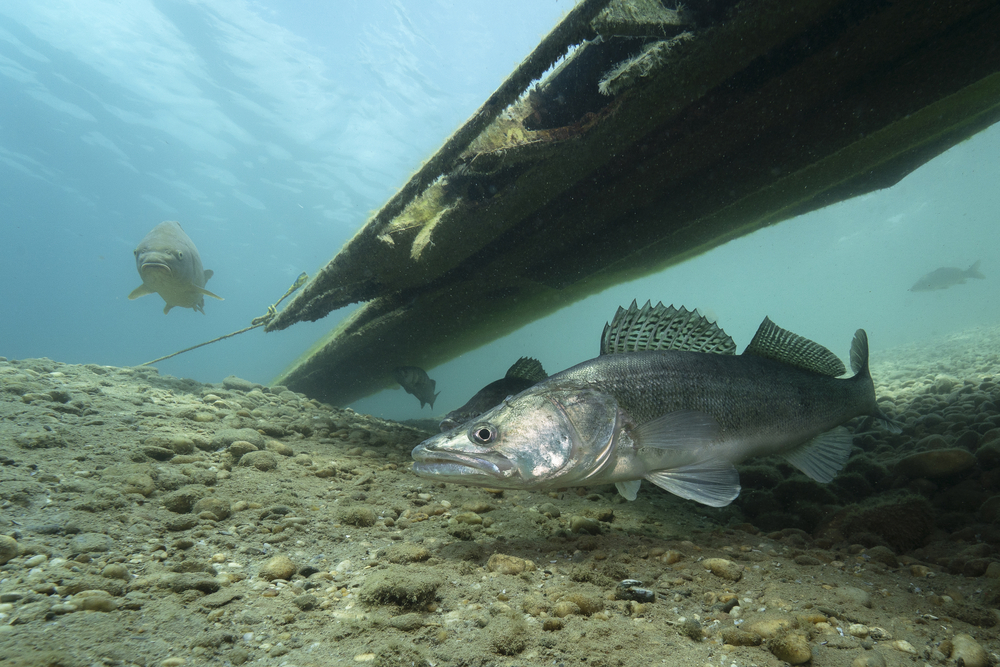
What changes for zander in spring?
Spring is not a single, uniform state. In early March, a lake may still feel like a winter fishery, while a shallow, wind-sheltered area warms up significantly faster on the same day. By April or May, water level, forage, and spawning activity may already look completely different again. The central point of the previous article therefore remains valid: zander fishing in spring cannot be treated as one-size-fits-all.
The order matters when choosing your starting point. First assess the fishery, then the fish, and then the lure. Look for areas where forage has a reason to appear or pass through: a sunny bay mouth, an inflow, the drop-off before a shallower section, a calm current zone, or an area with cover. Zander do not necessarily have to be there. But you have a reasoned hypothesis instead of casting in a random direction.
Practical test: During one fishing day, compare a deeper area connected to winter habitat with a shallower, structure-rich transition. Record visibility, water-temperature trend, signs of baitfish, and contacts. After several sessions, this will give you your own picture of the fishery—far more valuable than a blanket “spring depth.”
When does it make sense to start searching for zander in spring?
The previous article describes zander as becoming increasingly active after winter, before reproduction becomes the priority. That is a useful concept, but it is not a loophole based on the calendar. Closed seasons vary among German states, angling associations, and individual fisheries. Protected areas and local restrictions may also apply. Check them before every fishing day directly with the fishery operator or in the current regulations.
For planning purposes, this means you can read the fishery in spring without fishing sensitive areas. If you see baitfish moving into a bay or more activity gathering along a drop-off, that is an observation for the period after the closed season—not a reason to scout spawning sites. The more sustainable question is: What fishable structure lies outside the sensitive area and connects forage with deep water?
Where should you look for zander in lakes during spring?
Lakes and reservoirs offer many possibilities in spring: shallow bays, steep slopes, old river channels, weed edges, submerged trees, reefs, and plateaus. That is precisely why “find the drop-off” is not enough. A drop-off is only interesting if it serves a function. At a bay mouth, for example, it may form the route between a deeper retreat and a feeding area. Along a plateau, it may concentrate forage. At a channel, it may mark a clear travel route.
The existing article mentions areas between two and six meters as a spring starting point. Treat this as a starting window, not a rule. In a clear, deep lake, the relevant depth line may differ from that in a turbid, shallow gravel pit. Fish a structure systematically: first the foot of the drop-off, then the slope, and finally the shallower side. This lets you determine whether the fish are using the transition instead of simply following a number on the fish finder.
Our assessment: If a shallow area warms visibly faster and holds forage, the next deeper connection may be more important than the warmest spot itself. Zander can use the shallower area without staying there permanently. Test this hypothesis with two or three casts through different depths, not by changing lures after the first unproductive cast.
Where should you look for zander in rivers and canals during spring?
In rivers, current changes how you search. Zander do not have to hold in the strongest main current if a calmer seam, outlet, or structured drop-off is accessible nearby. The previous article mentions bridge pilings, submerged structures, bottlenecks, and harbor areas as potential clues. Interpret these features by their function: Where is water diverted? Where does a calmer pocket form? Where can forage pass by or be swept in?
A canal is not simply a straight channel either. Narrow sections, sheet-pile walls, inflows, harbor entrances, back currents, or abrupt bottom changes can concentrate forage. Do not search for a famous spot; compare two areas with different current dynamics instead. The article Finding Fish in Rivers helps you assess seams, channels, and calm zones before your first cast.
Practical test: At a groyne, do not fish only the tip. Test the inflow, calmer center, and outflow with the same lure and a comparable presentation. Only after you know which section produces forage activity or contact should you change the weight, action, or color.
Why should the spawning season not be part of your fishing plan?
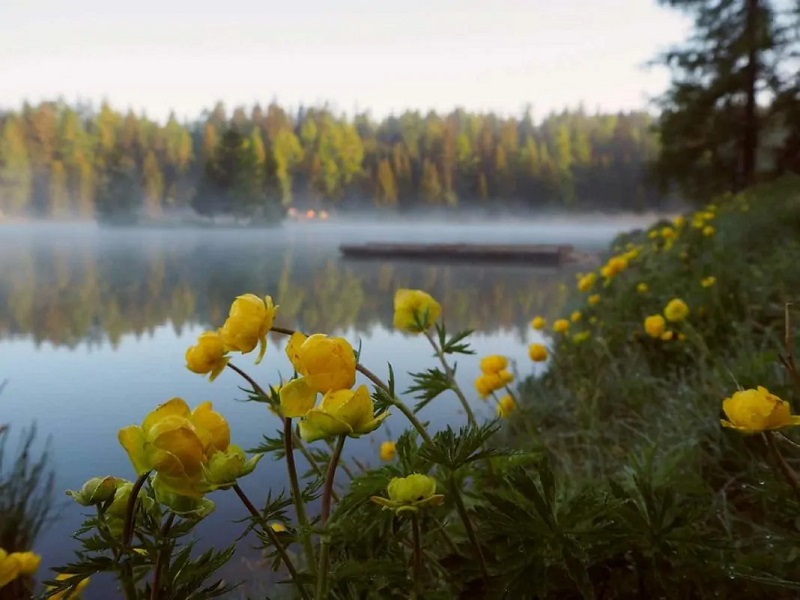
In spring, reproduction shifts the priorities of zander. This explains why certain areas are especially sensitive biologically. But it is not a guide to finding nests or shallow spawning areas. Precisely because a male guarding a nest may react to stimuli, a strike there is not a normal feeding bite or a sporting target.
The practical consequence is simple: Observe current closed seasons, respect protected and restricted areas, and do not share spawning-site coordinates. After the protected period, focus on adjacent, fishable transitions—for example, a drop-off outside the shallow zone, a deeper bay mouth, or a calm river connection. This protects the offspring while still giving you a legitimate starting point for your fishing day.
What roles do light, turbidity, and time of day play in spring?
The previous article describes zander as being especially well adapted to low light and identifies twilight and night as important windows. That remains a good starting point. But it must fit the fishery. In clear water, the transition to twilight can improve your chances because it gives zander a different visual advantage over their prey. In turbid river or canal water, this boundary may be much less distinct.
From the research: Studies of zander movement activity show that light conditions and activity can be related. For fishing practice, this does not provide any guarantee based on the moon phase or time of day. A useful application would be to test the same drop-off area during two light conditions in clear water instead of appearing only once at the “best time.”
Wind and cloud cover belong in the same set of observations. They can affect the water surface, light, and baitfish. You cannot tell whether this provides an advantage on your fishery from the weather report alone. Instead, ask: Where is the forage currently visible, accessible, or detectable on the fish finder?
How do you find the right depth in spring?
“Close to the bottom” is a sensible starting point because structure and many forage organisms may be found there. But it is not mandatory. If forage is suspended above the bottom, that height may also be critical. From a boat, a fish finder helps distinguish forage depth from structure. From shore, use casting angle, sink time, bottom contact, and repeatable retrieves.
Divide your test into three levels: the foot of the drop-off, the slope, and the shallower top. Do not retrieve the lure at the same speed everywhere. Give it time along the suspected attack line. A bite, a following fish, or even clear bottom contact provides information. In contrast, a lure that shoots across the drop-off answers very few questions.
Which lure presentation suits your search area in spring?
The original article mentions slow retrieves, jigging, reel-and-pause retrieves, lifting, pauses, and vertical fishing. These approaches remain relevant because they produce different lure paths. With a reel-and-pause retrieve, the lure is moved by turning the reel handle; when jigging, you make it jump with the rod; when lifting, you raise the lure in small, controlled movements. The key is knowing where the lure is running at any given moment.
In spring, you do not automatically have to fish extremely slowly. If forage is moving actively and the structure allows it, you can test a more pronounced, slightly livelier presentation. In colder water or along a calm transition, a slower presentation may be the more plausible first choice. Change only one variable at a time: first the casting angle or weight, then the presentation, and afterward the lure size and contrast. Detailed practical guidance is available in Reel-and-Pause Retrieves, Jigging, and Lifting for Zander.
What does an effective spring plan for zander look like?
- Rules before route: Check the current closed season, restricted areas, access rights, and local requirements.
- Read the changes: Record the temperature trend, visibility, wind, water level, and signs of baitfish.
- Justify three zones: For example, a bay mouth, a deep connection to a drop-off, and a calm river outflow.
- Break down the depth: Deliberately test the foot of the drop-off, the slope, and the shallower side in sequence.
- Control the lure path: Choose the weight, casting angle, and presentation so the lure remains in the suspected window long enough.
- Record the result: Do not dismiss contact, time, depth, signs of forage, and weather as chance.
The biggest improvement in spring does not come from making one cast to the right spot. It comes from a repeatable line of thought: What brought the forage into this zone today, and where can zander reach it with minimal effort? The previous article provides the important building blocks—activity after winter, different types of fisheries, light, depth, and presentation. This structure turns them into a fishing plan you can test on your own water.