
Pike fishing · Season, weather, and activity
When is the best time to fish for pike—and where are the fish then?
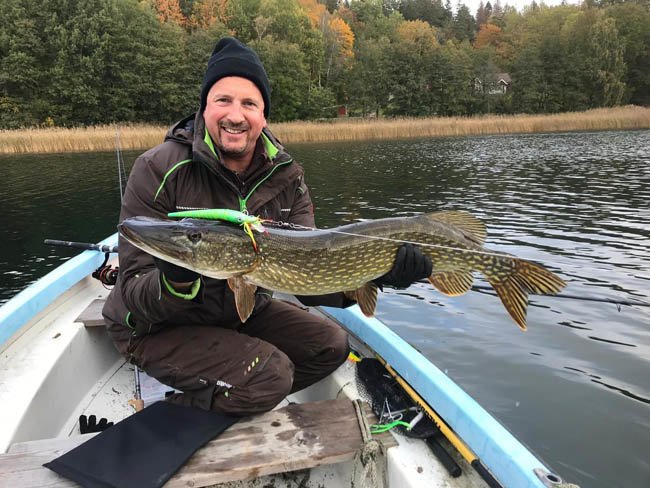
Is there one universally best time to fish for pike?
“They always bite in fall” and “You only catch pike in the morning” are convenient rules, but they do not make for good planning. They conflate at least two things: how active pike and baitfish may be—and whether you can reach them at your chosen spot at all. The right time of day does not automatically make an empty spot productive. By contrast, a promising spot can also work at midday if it offers prey, cover, and an attack lane.
Use the season to set your search direction. In spring, check warming areas and transitions to shallow water. In summer, oxygen, light, vegetation, and accessible depth become more important. In fall, the search follows the baitfish and changing vegetation zones. In winter, look for stable areas and remaining vegetation. The specific body of water, its water level, visibility, and wind determine which of these factors matters first.
| Observation | Initial search direction | What you need to confirm |
|---|---|---|
| Warming after a cold spell | Shallow water, bay mouth, travel route | Prey, protective regulations, and adjacent depth |
| Heat or dense vegetation | Shade, weed edge, cooler depth, open water | Oxygen, prey layer, and hunting area |
| Cooler nights and dying weeds | Drop-off, channel, baitfish school, windward side | Actual prey and stability of the conditions |
| Cold, stable water | Remaining vegetation, deep drop-off, sheltered structure | Accessible prey rather than simply the greatest depth |
What does the Kleiner Döllnsee study show about the best time for pike?
Kuparinen, Klefoth, and Arlinghaus analyzed experimental catch-and-release fishing days at Kleiner Döllnsee. The natural lake in northeastern Germany covers 25 ha, is shallow on average, and has a maximum depth of approximately 7.8 m. The authors studied catch rate per hour of fishing in relation to environmental conditions, time of day, and effort. The result is more interesting than a “best moon phase”: catchability resulted from multiple influences, and intensive fishing during the previous two days significantly reduced the catch rate.
This study warrants two clear limitations. First, it describes one specific small lake and a defined experimental design—not every river, gravel pit, or club lake. Second, it measures catch rate, not the hunger of all pike directly. Nevertheless, it has a concrete takeaway for your fishing: watch the wind, temperature trend, light, and especially fishing pressure. If a spot seems dead after a tournament or heavy angling pressure, “an even brighter color” is rarely the best answer.
The study is linked directly here: Kuparinen, Klefoth & Arlinghaus (2010). It helps prioritize probabilities, not make promises about catches.
When and where should you look for pike in winter?
As temperatures fall, metabolism, vegetation, and prey change. Many plants die back, while others remain as low growth along the bottom. This remaining vegetation in particular can be valuable to small fish and pike. In larger lakes, baitfish may concentrate in deeper areas; the edge of a plateau or a hole can then become a plausible pike location. In small bodies of water, however, the same fish may remain closer to shore.
There is no universal “pike hold deep” rule in winter. Pike seek accessible food and conserve energy. Retrieve slowly enough to keep the lure in their field of vision, and fish transitions thoroughly. A mild, sunny day can open up shallower zones; a cold snap can make them unproductive again. Record the temperature trend and recent contacts instead of noting only the calendar date.
What changes when fishing for pike in spring?
The first warmer areas can attract small fish, and pike use the transitions to these zones. That does not mean you should blindly fish the shallow bay. Its entrance, a channel, or the first weed edge outside it is often a better starting point. Before and after spawning, the role of the same location can change quickly.
Local regulations take priority over every question about location. Closed seasons, protected areas, and lure restrictions vary by German state and body of water. You can find a detailed approach to warmth, turbidity, and prey in the spring pike article.
When are pike active in summer?
In deep lakes, the water can stratify. The thermocline is not automatically a pike hot spot. However, it can form a natural boundary for prey if oxygen becomes scarce below it. So do not search abstractly “at the thermocline,” but rather for schools, a drop-off, or a vegetation zone in the appropriate part of the water column.
In shallow waters, shade, weed edges, inflows, and wind-affected shores are often more important. Very dense vegetation can cause localized oxygen problems early in the morning, especially after warm nights. In that case, the edge, an open strip, or a deeper transition may be better than the middle of the weeds. In clear water, cloudy weather improves the pike's camouflage; in hot weather, activity may shift more toward morning, evening, or brief weather changes.
What makes fall special for pike fishing?
As nights grow cooler, some summer patterns break down. Weeds become patchier, baitfish use different depths, and wind can push food toward shores or drop-offs. Broad weed edges, the edge of an open-water school, underwater humps with deep water nearby, and transitions out of shallower bays are therefore good initial hypotheses.
Fall is not just “big lure, big fish.” Large pike may respond to large prey, but lure size should match the available forage fish, depth, and activity level. Start with the school and its surroundings, not a catch formula. Prey, contrast, and running depth then determine the presentation.
Why can the fall transition make pike fishing more difficult?
In deep, stratified waters, the summer thermocline separates sections of the water column. When the surface cools and wind mixes the water, temperature and oxygen distribution change. Areas that were unfavorable in summer can become accessible again; at the same time, the previous baitfish layer may disperse. Small, shallow bodies of water usually respond faster than large, deep lakes.
The practical plan is not to guess a specific day for the transition. Watch the changes: sharply falling temperatures, rain, wind, a dispersed sonar image, or missing prey at a normally reliable spot. During this phase, lower your expectations, search several transitions, and give the water time to settle. Stability is a better signal than the word “fall” alone.
What time of day makes sense for pike fishing?
The Kleiner Döllnsee study found higher catch rates during twilight. At the same time, the book emphasizes that light, season, water color, and vegetation alter underwater visibility. In clear water and bright summer light, pike may be less able to use their camouflage and wait for better light conditions. Cloudy weather or more turbid water changes this logic.
Therefore, plan not just a time of day, but a time window with a purpose: the sheltered weed edge in the morning, the newly windward shore when the wind picks up, and the open-water edge or bay mouth in the evening. If you find neither baitfish nor structure, change the zone first—not just the time on the clock.
How do you plan a fishing day around the season and weather?
- Check regulations and conditions: Confirm closed seasons, water level, wind, temperature trend, and safety.
- Translate the seasonal phase: Do not just think “fall”; ask where prey or vegetation is changing now.
- Choose three zones: For example, a weed edge, bay mouth, and open-water edge—each with a reason.
- Fish the appropriate depth: Run the lure where pike can intercept prey.
- Adjust one thing at a time: Change the zone and depth first, then speed and contrast.
Record catches, follows, and fishless hours along with weather, visibility, prey, depth, and fishing pressure. This teaches you which combination of conditions works on your water. That is more valuable than any blanket statement about the best time for pike.
Sources and adaptation: This article expands on the existing WordPress post “Best Time for Pike Fishing” and retains its original image. It combines Modernes Fische Finden – Der Hecht with Kuparinen, Klefoth & Arlinghaus (2010), DOI 10.1016/j.fishres.2010.03.011. The study concerns a small German lake and is presented as context, not as a universal moon or weather calendar. Before fishing, check the closed seasons, protected areas and fishing rules that apply to your location and chosen water.