
Pike Fishing · Spring
Where Are Pike in Spring—and Which Hotspots Really Make Sense Now?
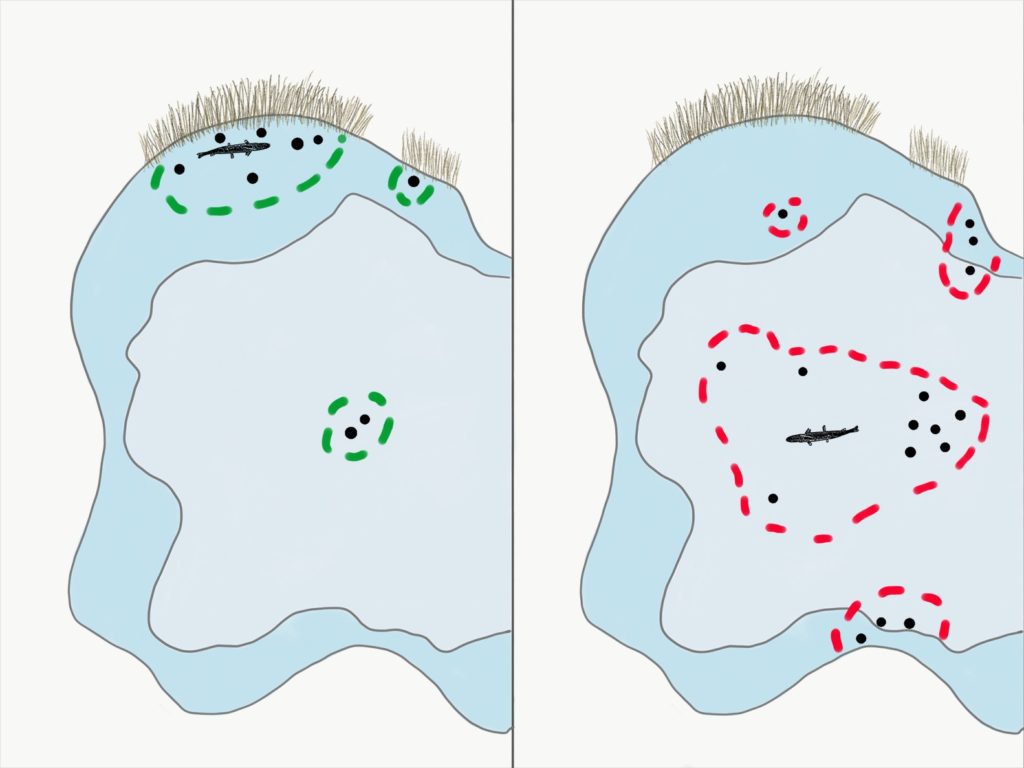
Why Does Spring Change Pike Location?
Spring is not a date on the calendar. A shallow gravel pit lake, a murky oxbow, a deep quarry lake, and a river warm up differently. Wind, water level, inflows, shoreline orientation, and water color can shift the process by days or weeks. That is why “they are in the shallows in mid-April” is not a useful rule.
Pike gather in comparatively few structure-rich areas to spawn. Afterward, many fish begin moving toward their first feeding areas and later summer habitats. During this transition, prime summer hotspots are not necessarily occupied yet. The better question is: Where are prey fish finding warmth, protection, and food today—and which break connects that area to deeper water?
Spawning season and closed seasons are more important than any fishing plan. Check the fishery regulations and regional requirements before fishing. Protected areas and closed periods remain off-limits even when fish are visibly congregating there.
Where Do the First Warm Areas Become Interesting?
During the first sustained warming period, many small fish seek areas where they lose less energy and can find food. Shallow bays, sunny shorelines, remnant vegetation, reed edges, or the transition around an inflow can fit the bill. Pike are not necessarily holding in the warmest water itself. The edge is often better: the entrance to the bay, the first sharp break, the end of a vegetation line, or the small channel beside it.
A temperature reading is only an indicator. The earlier version cites 5 to 7 °C as a starting point for searching warm areas. That may be a useful range to monitor on your water, but it is not a threshold for catching fish. The difference matters more: Has the shallow area plausibly remained warmer than the rest for several days, is prey actually present there, and can a pike quickly move from there into deeper water?
- Shallow bay: Do not begin by casting blindly; compare the entrance, windward side, and access to deeper water.
- South- or west-facing shore: It may warm faster, but without prey that proves nothing.
- Channel or break: It connects hunting water with a retreat area—often the stronger initial hypothesis.
- Vegetation: Dead weeds, reeds, and wood provide cover as long as they are not merely empty decoration.
What Role Do Turbidity and Contrast Play in Spring?
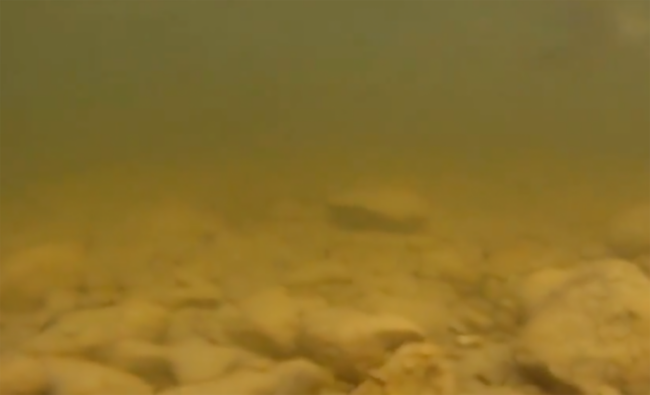
Visibility changes how pike and prey fish perceive one another. In murky water, a lure's shape may matter more than the product color shown on the package: a clear outline against the background, an appropriate running depth, and a speed that matches the likely prey. White and black can provide strong contrast against a light background, while many bright colors look different underwater than they do above the surface.
The video is useful because it illustrates the right way to think: not “Which color always catches fish?” but “Which prey is plausible here, how deep is my lure running, and does its shape stand out at this visibility?” This keeps you from randomly switching among ten colors after an unsuccessful cast when the lure is simply running outside the strike zone.
Why Are Prey Fish More Important Than a Fixed Temperature?
When the first forage fish move into shallow areas, pike distribution can change quickly. Shortly before spawning, prey is often still moving: in one bay today, on another shoreline tomorrow, or at the transition to deeper water. So observe more than the surface. Do you see small fish? Are there midge larvae, emerging vegetation, an incoming drainage ditch, a mussel bed, or a sheltered break?
Later in spring, other fish follow their own spawning and feeding routes. A pike may then wait at the edge of this movement—not necessarily in the shallow spawning area, but at the exit, along riprap, in front of vegetation, or at a drop-off. That is the essence of systematically reading pike locations: Find the prey first and only then choose the lure.
Where Are Pike After Spawning?
After spawning, pike do not have a prescribed “recovery depth.” Their condition, the shape of the water, prey, and disturbance determine where they hold. On a small lake, the transition from a spawning bay to a vegetation edge may cover only a few casts; in a river, the search shifts more toward shorelines with reduced current, bays, and obstructions. So do not rely on a single spot; use a route consisting of three connected zones.
- Area near spawning grounds: Check it only where regulations and protections allow—and keep your distance from sensitive habitat.
- Transition: Bay entrance, channel, riprap, end of vegetation, or a sloping shoreline break.
- First feeding area: Prey fish, cover, and enough depth that the pike does not have to hold in exposed shallow water.
If you find no sign of prey in any of the three zones, change your location hypothesis first. Switch lures only afterward. That saves time and prevents blank days caused by searching in the wrong place.
What Lure Presentation Works for Pike Fishing in Spring?
A large soft plastic, shallow-running hard bait, spinner, or spoon can work if it runs where the pike expects prey. A slow, controlled retrieve may make sense along shallow edges. At the break, you need sufficient running depth and time in the fish's field of view. In murky water, check silhouette and contrast first; in clearer water, prey size and natural presentation may matter more.
Change only one thing at a time: first depth or casting angle, then speed, and only then color. That way, after a contact or missed strike, you know which adjustment actually helped. The detailed decision guide is in the topic article Choosing Pike Lures Based on Prey and Conditions.
How Do You Plan Your Next Spring Fishing Day?
- Rules first: Check the closed season, protected areas, and fishery regulations.
- Warmth as a hypothesis: Which bay, shoreline, or inflow might offer an advantage today?
- Confirm prey: Look for small fish, food, and cover—from shore with your eyes, and from a boat with charts and sonar as well.
- Fish the transition: Cast not only across the bay but also around the entrance, break, and adjacent deeper water.
- Adjust systematically: If there are no signs of fish, change the zone first, then the running depth, and then the presentation.
Record the temperature trend, visibility, wind, small fish, and the depth of any contact. After several sessions, you will know not only a “spring hotspot” but also the conditions under which your water produces in spring. Start with the fishing—not the lure.
Sources and adapted material: This article expands on the existing WordPress post “Pike Fishing in Spring” and incorporates its two relevant images and the Vimeo underwater experiment in appropriate places. Additional context was drawn from Modern Fish Finding—Pike. Temperature values and the video are observational aids, not universally valid promises about catches or colors. Before fishing, check the closed seasons, protected areas and fishing rules that apply to your location and chosen water.