
Perch Fishing · Presentation
Which Perch Lure Matches the Prey, Depth, and Season?
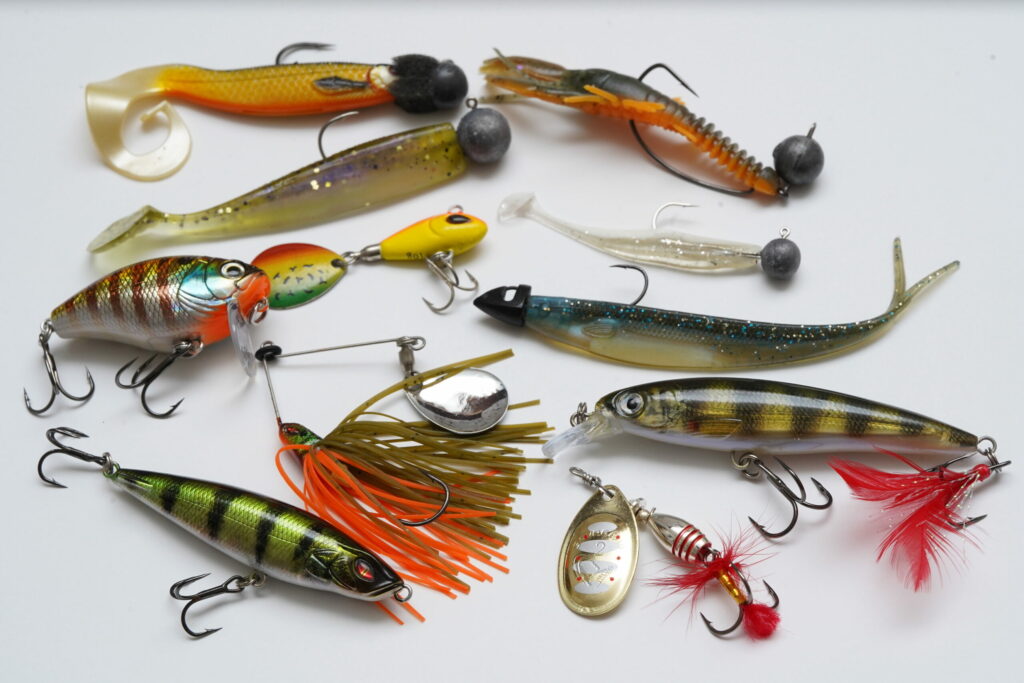
Why does the lure question come after location?
Many perch anglers start with the tackle box: soft plastic, hard bait, crankbait, or creature bait—one of them is bound to work. This sequence feels proactive, but it postpones the most important decision: Why should a perch feed right here, right now?
That is why the cornerstone article on perch hotspots puts the zone before the lure. Only after assessing prey, structure, light, temperature, and depth can you make a sound presentation choice.
What prey do perch eat in your waters?
Perch are versatile predators. A school can quickly focus on a rewarding food source—such as juvenile fish in open water, chironomid larvae over soft bottom, or crayfish along riprap.
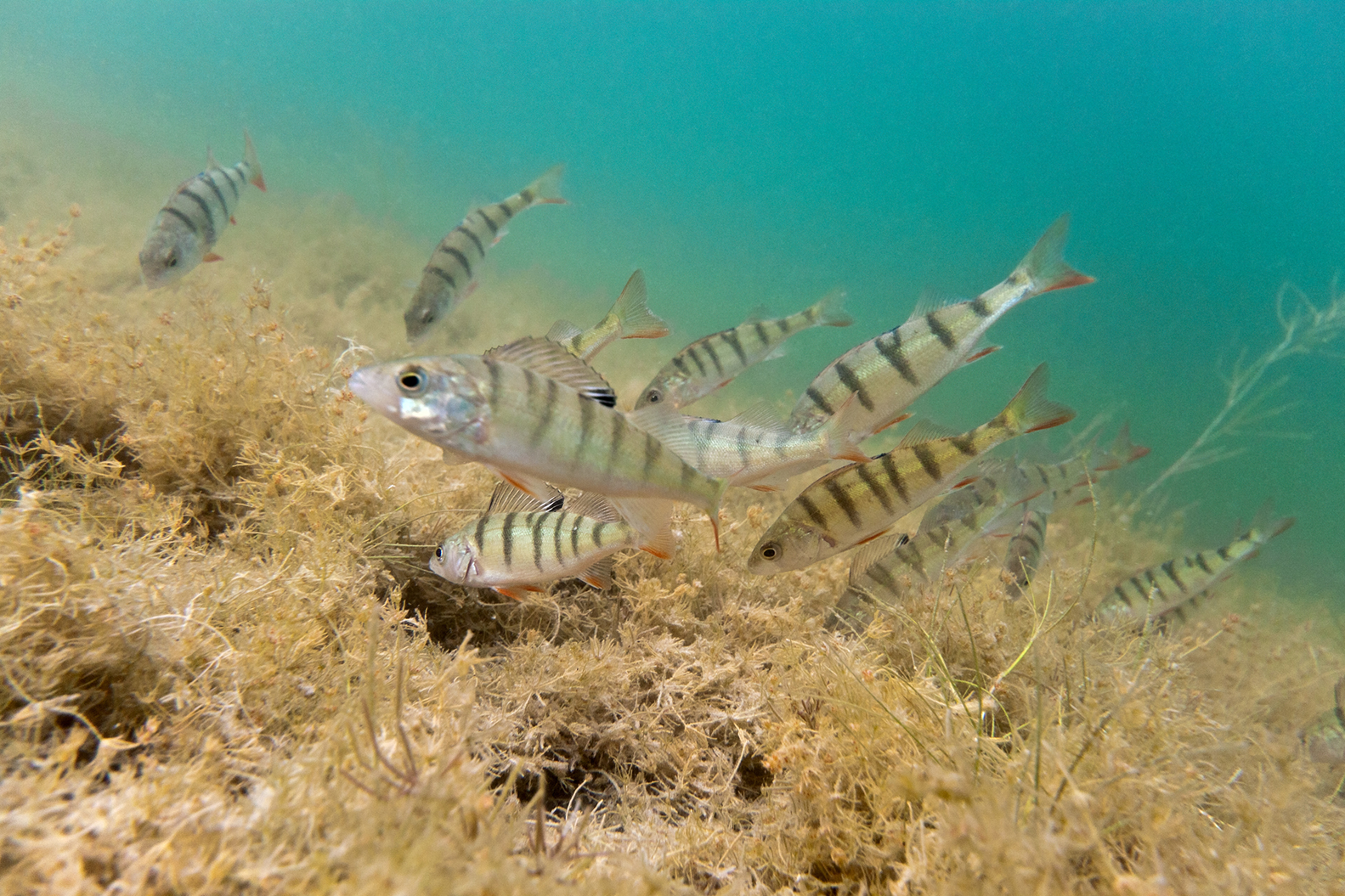
- Fry and small fish: slender silhouette, fleeing movement, often along drop-offs or in open water.
- Crayfish and invertebrates: bottom-oriented presentation, short hops, and pauses over hard bottom.
- Insect larvae and zooplankton: small prey, often requiring a slow or suspended presentation in the correct part of the water column.
Watch small fish, birds, crayfish along the bank, the bottom, and sonar images. However, a visible baitfish is not proof that perch are currently hunting it. It only becomes a useful hypothesis when depth, structure, and activity also fit.
How do you choose lure size based on evidence?
The simple rule “big fish, big lure” often leads perch anglers in the wrong direction. Large perch may focus on small, energy-rich food; conversely, a larger lure may make sense when larger baitfish are concentrated in the body of water.
Start with a size that credibly represents your prey hypothesis. If you cannot identify clear prey, begin with a subtle option that reliably reaches the right depth, then change only one variable at a time.
How do perch hunt as a team—and what does that mean for lure size?
A single perch is agile, but it is not a high-speed hunter. When targeting larger baitfish, the school helps: A roach or bleak dodges the first attacker and moves into the path of a second perch. This is an important distinction when choosing a lure. A slim, small lure may represent an injured or evasive baitfish more convincingly than an oversized meal that looks completely out of place in the school.
Large perch are not always focused on fish, either. They may eat crayfish, worms, insect larvae, or other invertebrates when those foods become available in abundance over a short period. A 40-centimeter perch may therefore react to a small crayfish or worm imitation even though much larger baitfish inhabit the same waters. Predator size is a clue—the current food source is the better basis for your choice.
What prey window determines lure size?
Among juvenile perch, the number of attacks on members of their own species increases markedly during a narrow growth stage and falls again once the prey becomes too large or fast. In practice, this means checking whether fry of a particular size are currently present. A lure around five to seven centimeters long may be plausible for a 30- to 35-centimeter perch if that exact prey is available. In another body of water, a crayfish or chironomid larva measuring two to three centimeters may be the better model.
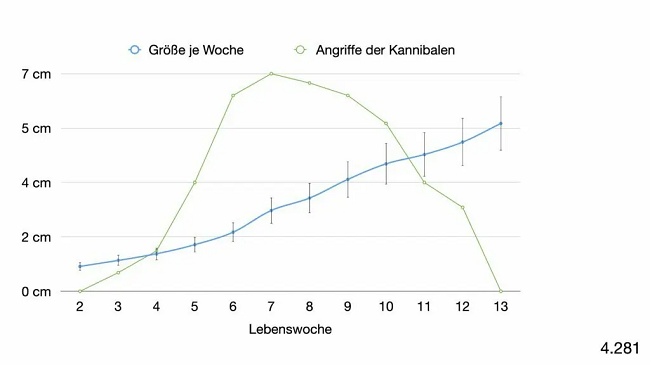
The most common prey is not always the most conspicuous. Before your first cast, write down what you actually observe: the size of small fish, crayfish along the bank, insect activity, baitfish above the bottom, or merely an assumption based on the season. This note prevents you from confusing a lure size in a catalog with prey that does not even occur in the water.
Which perch lure matches which prey?
Worms and Natural Baits
Worms are familiar food for perch: Aquatic worms, Tubifex, and other annelids are eaten, as are earthworms washed into the water after rain. A float, drop-shot rig, or bottom-oriented rig lets you work a worm slowly through a known perch zone. Where coarse fish are abundant, larger worms are often more selective and stay on the hook better. Always check the fishing regulations to determine whether natural bait, baitfish, and the specific rig are permitted.
Baitfish Imitations and Spinners
A small baitfish or slender soft plastic works when you see fry or small fish in open water or along a drop-off. A spinner produces water displacement, flashes, and vibration and can cover a larger area. It is especially practical when you do not yet know what depth the perch are holding at. Once you make contact, switch from a search presentation to one that stays at that depth longer.
Crankbaits, Twitchbaits, and Topwater Lures
Crankbaits with a defined running depth can search a shallow drop-off, the top of vegetation, or riprap. Twitchbaits can be presented around individual pieces of structure with short twitches and pauses. Topwater lures such as poppers, walking baits, or small prop baits are not a year-round solution, but they can trigger a very direct reaction when activity is visible, shallow water is warm, or perch are actively hunting. The surface only makes sense when perch expect prey there or are actually pursuing it.
Soft-Plastic Shads, Worms, and Creature Baits
Soft plastics cover many situations: a slender shad for small fish, a worm for a subtle presentation, a curly-tail grub for water displacement and movement, or a creature bait or soft-plastic crayfish for hard bottom. A jighead lets you search depths quickly; a Texas or Carolina rig keeps the lure near the bottom longer and comes through structure more effectively. A drop-shot rig holds it at a specific height when perch are positioned along a drop-off or above a plateau.
Shape alone does not catch fish. A soft-plastic crayfish over soft mud is just as unsuitable as a fast-moving shad when perch are holding quietly on the bottom. What matters is the combination of silhouette, weight, fall, bottom contact, and the time the lure remains in the suspected zone.
When do color and contrast become important?
In clear water, perch can spot a lure early and inspect it critically. In stained water, wind, deeper water, or low light, strong contrast often becomes more important than lifelike detail.
Think in terms of three questions: How far can the perch see? How much does the lure move against a busy background? And is it meant to imitate prey or simply trigger a reaction? This turns color into a reasoned adjustment rather than a matter of dogma.
Underwater images from the Lure Knowledge Book show why color cannot be evaluated independently of depth. In green water, blue became less distinct from the background as depth increased; red appeared darker, while yellow remained conspicuous longer under these test conditions. In murky water, light and dark silhouettes may be more visible than transparent body parts. These are observations from specific test conditions, not rankings for every German body of water.
In low light, brightness contrast becomes more important because the fishes' light-sensitive rod cells are more active. Black, white, or a clearly defined back may then provide a better outline than a colorful pattern that blends into the water. UV-active pigments may become visible under certain conditions, but the amount of UV light decreases sharply with water color and depth. Use UV as an additional test—never as a substitute for the right depth.
How do depth and presentation work together?
If the sonar shows baitfish above a drop-off, a lure dragging along the bottom may miss the target. If perch are holding along a weed edge, a lure that stays just above the vegetation may produce more contacts than the same lure on the bottom.
| Suspected Situation | First Presentation | If You Get No Indication |
|---|---|---|
| Baitfish in open water | slender lure at the prey's depth, steady retrieve | change speed or height, then check the area |
| Crayfish on hard bottom | near the bottom, short hops, longer pauses | adjust angle and weight |
| Weed edge with unclear depth | horizontal presentation just above the vegetation | test one depth level higher or lower |
Which presentation matches the perch's activity level?
A spinner, crankbait, or quickly retrieved shad lets you check a large area. If a fish follows the lure to the boat but does not strike, the trigger may have been right but the speed too high. Do not immediately switch to a new lure; instead, slow down, extend the pause, or hold the lure along the drop-off.
When jigging, bottom contact determines what your cast tells you. A jighead that is too heavy plows through the bottom and leaves the visible zone too quickly; one that is too light does not reach the prey's depth. When using a lift-and-fall retrieve, the strike often comes during the fall. A drop-shot, Carolina, or Texas rig lets you keep the lure at one level or close to the bottom for longer.
The underwater observations in the Lure Knowledge Book also show that fish do not find a lure by color alone. Movement produces pressure waves, and a larger paddle tail can strengthen these signals while reflecting light. That may help in murky water; in clear water, a smaller, subtler lure may appear more convincing. Change one property at a time and observe what the perch actually does.
Which perch lure matches spring, summer, fall, and winter?
| Seasonal Period | Typical Hypothesis | First Lure Test |
|---|---|---|
| Spring | Shallower transition zones, larvae, worms, and early fry become more important. | small worm, creature bait, or slowly retrieved soft plastic; a small hard bait when activity is visible. |
| Summer | Perch may hold around vegetation, along drop-offs, in open water, or near the thermocline. | spinner, crankbait, or shad for searching; then drop-shot or jig at the depth you found. |
| Fall | Baitfish become more mobile and concentrate near inflows, along drop-offs, or in open water. | slender shad, hard bait, or baitfish imitation at the prey's depth. |
| Winter | Stable areas, small prey, and low energy expenditure become more important. | small soft plastic, worm, or drop-shot with long pauses; check depth and oxygen first. |
This table is not a calendar that guarantees catches. A mild winter may provide a different food supply as early as February than a cold March. A summer body of water with low oxygen forces perch into a different zone than a clear lake with productive open water. Observe prey and depth first, and use the season only as a starting point.
How do you turn lure selection into a fishing plan?
- Define the zone: “I will first fish the weed edge between three and five meters.”
- Assume the prey: “I expect small baitfish there that can retreat into deeper water.”
- Choose the presentation: Derive size, weight, contrast, and presentation from this assumption.
- Test it properly: Make several casts, cover different angles, and fish the suspected depth.
- Change only one thing: Start with height, speed, or area—not color, lure, rod, and spot all at once.
A good perch lure is therefore not the winner of some eternal best-of list. It is a tool for testing a specific hypothesis on the water.
After fishing, do not just record the lure's name. Write down where the perch was holding, which prey you suspected, at what depth contact occurred, and whether the fish followed, attacked, or merely nudged the lure. After several fishing days, you will recognize whether fish in your waters respond more to familiar prey, contrast, pressure waves, or a long presentation. That is exactly how you develop your own perch lure plan.
Sources and incorporated material: This article combines the existing WordPress article Perch Lures Compared with Modern Fish Finding—Perch, Part 1 and Lure Knowledge. Material incorporated and reframed includes perch hunting in groups, prey windows, worms, baitfish, spinners, crankbaits and twitchbaits, soft plastics, seasonal prey, as well as visibility, contrast, UV, and pressure waves. The lure hero image, chironomid larvae illustration, prey-window graphic, and Vimeo video come from the original article and each appear here with the relevant topic. Individual study and underwater findings apply only under their respective conditions.
Continue in the topic cluster: First read how to identify perch hotspots based on the water and prey. The article Perch Fishing in Spring covers the spring search.