
Perch Fishing · Research and Practice
What Determines Who Catches the Biggest Perch?
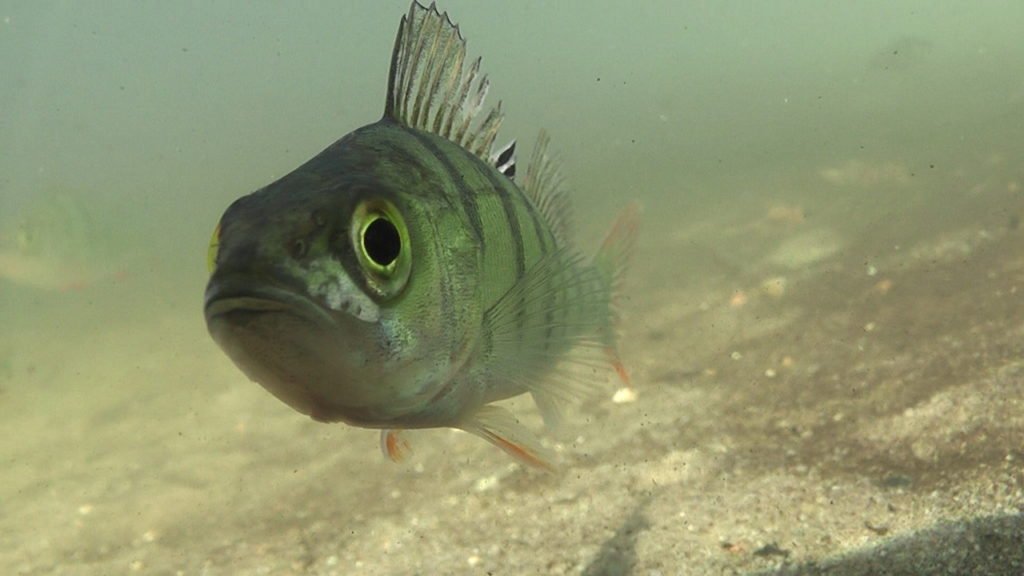
What Did the Study Examine?
The study is interesting because it does not view fishing as a single hero story. Instead, many fishing trips and catch reports were compared. This provides a more objective perspective on why some anglers catch perch more often while others land a big fish more frequently.
The data are specific: 143 anglers fishing on 21 natural lakes in Mecklenburg-Western Pomerania between September 2006 and August 2007 documented 878 perch-targeted trips and 8,392 perch. The average catch rate was 2.4 perch per hour; the average length of the largest harvested fish on each trip was 28.7 cm. These are observational data from these lakes—not a catch guarantee for your own body of water.
The results are not a catch guarantee for your body of water. They show probabilities under the conditions studied. A clear lake, a murky gravel pit, or a slow-moving oxbow can respond differently to the same weather.
An important point for context: The researchers compared actual anglers' fishing days, not standardized test casts using identical tackle and the same spot. Experience, bait or lure type, body of water, and season can therefore interact. This makes the study valuable in practice, but it does not prove that any single factor alone produces a big perch. The complete research paper is linked as Heermann et al. (2013).
Why Does Experience Change Catch Rates?
Experience acts like a filter on the water. Anglers who have seen many situations are more likely to recognize whether a breakline can concentrate forage, whether a school is truly active, or whether a fish finder image merely provides a clue. This does not automatically produce more fish—but it increases the number of well-reasoned attempts.
Perch also learn. Experiments show that they can distinguish individual unsuitable or repeatedly presented prey patterns. In heavily fished waters, the problem may therefore be not only the lure but also repeatedly using the exact same presentation. Variety does not mean randomly casting ten colors: Make deliberate changes to silhouette, contrast, running depth, or speed.
This also explains why an angler with less gear can be more successful than someone with a larger tackle box. Knowledge reduces the number of random decisions. You do not start at the most conspicuous spot, but at the spot for which you have a testable reason.
This is very practical for your next fishing day: Before your first cast, formulate a sentence such as, “The baitfish are holding on the windward breakline today; the big perch may be below them or off to the side in the shade.” Then test this assumption by changing depth, angle, and lure path. This is how experience is built: not by collecting memories, but by making decisions comparable.
Why Do Season and Forage Shift Perch Catch Rates?
The analysis clearly shows why blanket claims about the “best time for perch” must be treated cautiously. In spring, 26.5 % of the anglers in this study caught no perch; the figures were 15.2 % in summer, 17.1 % in fall, and 23.2 % in winter. This describes these fished lakes and these anglers during 2006/2007. It does not mean that perch categorically will not strike an artificial lure in March.
The useful concept behind this is the forage landscape. In early summer, zooplankton and chironomid larvae may be more important to perch than fry. The available forage changes later. When food becomes scarce or concentrated, the predator may become more active and therefore more accessible to anglers. First read what is happening in the body of water: fry at the surface, larvae along the breakline, crayfish on hard bottom, or baitfish in open water—and then derive the location and bait or lure from that.
What Do Baits and Lures Reveal About Catch Numbers and Fish Size?
The study suggests that artificial lures often reach many perch. Fish size showed a different pattern: Under the conditions studied, larger perch were caught more often with natural bait. This is an indication, not a general rule for every body of water.
The more useful question is therefore: What forage is currently available, and how can I present it convincingly? A small lure can catch a big perch if it imitates the dominant forage. A larger lure can draw a blank if it runs at the wrong depth or in the wrong location.
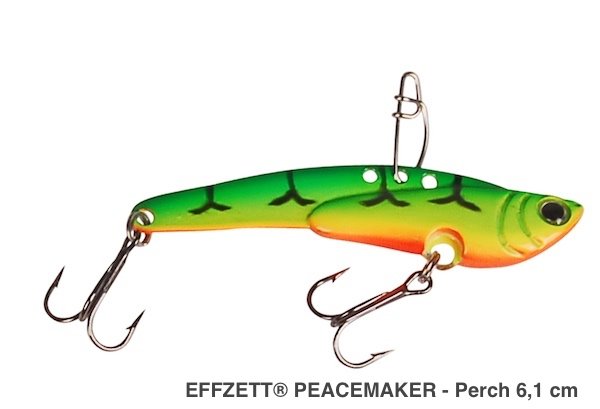
The study records only the broad categories “natural bait” and “artificial lure,” not the perfect shape, color, or retrieve. The result therefore does not mean “natural bait always catches big fish.” Instead, it is a reminder that targeting selective, large fish and catching many active fish can be different tasks. If you are specifically searching for a big perch, test not only lure size but also how long you keep it along the breakline, its running depth, and its distance from the baitfish school.
You can find the practical application in the article Selecting Perch Lures Based on Forage, Depth, and Retrieve.
Which Water Conditions Help?
In the study, factors including the size and water clarity of the lakes played a role. Another study of small lakes found larger perch more often in waters with varied shorelines: Bays, points, islands, and different niches increase the number of potential feeding areas and refuges. Larger, clearer lakes tended to offer better conditions for larger perch, but no single factor was strong enough to provide a reliable catch formula.
Forage also determines growth. In some years, small fish are on the menu; in others, chironomid larvae, crayfish, or other invertebrates dominate. Big perch do not automatically stop eating small organisms just because they themselves are large. The overall relationship remains crucial: Is there enough food? Can big perch conserve energy? Can they find hunting areas where they can reach prey while remaining protected themselves? You should therefore always connect map and fish finder data with forage and behavior.
Young or Old—What Is True About the Challenge?
The “young versus old” challenge is too simplistic. The study primarily examined fishing experience, angler type, bait or lure type, and environmental factors—not whether age causes someone to catch a big perch. Anglers with more experience and a specific focus on perch or predatory fish had higher catch rates. This does not support a sound conclusion that a particular age group generally catches the biggest perch.
The old article used the simplified phrase “over 40.” More precisely: In the models, extensive fishing experience was an influential factor—with particularly high catch rates among anglers with at least 40 years of fishing experience. That is entirely different from a person's age. A 28-year-old angler with many documented years on the water and a clear perch strategy may therefore be better prepared than someone who fishes only occasionally.
This is the most important message for you: You do not need to fish for decades before you can make better decisions. You can accelerate experience by documenting conditions, formulating a hypothesis, and recording after every fishing day which assumption was or was not confirmed. Expectations also matter when targeting big perch: A 40 cm perch may already be an exceptional fish in a small body of water. Size is always relative to habitat.
How Can You Apply This on the Water?
- Clarify your goal: Do you want to catch active perch or specifically search for a big fish?
- Assess the forage: What food could currently be abundant or especially energy-rich in your area?
- Prioritize holding areas: Where do forage, structure, light, depth, and cover come together?
- Fish beneath the baitfish school: If baitfish are visible, also check the zone below and beside them. Big perch do not always hold in the middle of the school.
- Use technology: Maps and fish finders help narrow the search, but they do not replace a behavioral hypothesis.
- Test patiently: Try several casts and angles before judging the bait or lure as “ineffective.”
- Learn: Document catches, blank trips, conditions, and decisions.
A big perch is therefore neither proof of magical talent nor pure chance. It is the result of many small decisions that make contact with the right fish more likely.
Sources and further reading: This article expands on the previous WordPress post and retains its two original images. The key figures and context are based on Heermann, Emmrich, Heynen, Dorow, König, Borcherding & Arlinghaus (2013), Fisheries Management and Ecology 20, 187–200. The data apply to documented fishing trips on 21 natural lakes in Mecklenburg-Western Pomerania and are used here as a decision-making aid, not as a catch formula. The cornerstone article on perch hotspots shows you how to develop your location selection process. For an overview of all topics, visit Perch Fishing.