
HANDS-ON REVIEW · GARMIN STRIKER VIVID 4, 5, 7 & 9 CV/SV
Is the Garmin Striker Vivid a good entry-level fish finder?
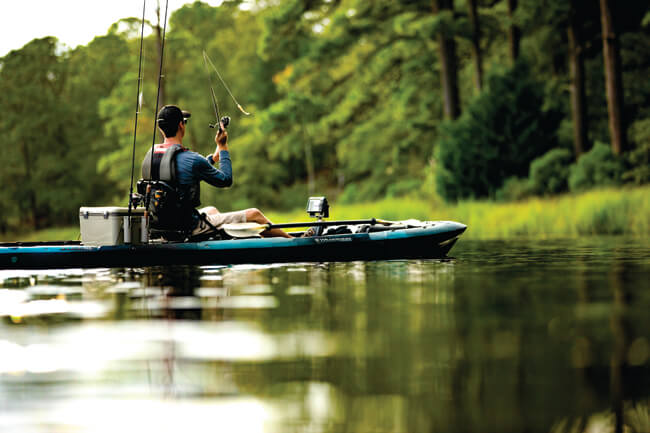
The Garmin Striker Vivid series includes devices from 4 to 9 inches. It is designed for anglers who want a better view of the bottom, drop-offs, vegetation, and notable areas without immediately building a large chartplotter or network system. This can be a particularly well-matched approach on small boats, kayaks, and belly boats.
This review preserves the original hands-on assessment from 2021/2022: What is actually new about Vivid, where are the series' strengths, and what limitations should you know before buying? The contents and availability of individual packages may change. For current purchasing decisions, we therefore always compare it with the fish finder review and current devices.
What is really new about the Garmin Striker Vivid series?
We are familiar with facelifts from the automotive industry: a slightly different design, a few new details—and suddenly there is a new model range. That is exactly how Vivid should be viewed. Garmin did not fundamentally change the successful Striker Plus hardware but revised the display presentation.
That is not a deal-breaker. The Striker series remains appealing in its class because its sonar and transducer capabilities offer a lot and provide budget-conscious anglers with a sensible entry point. However, “new” should not be confused with an entirely new platform.
Our criticisms of the platform remained:
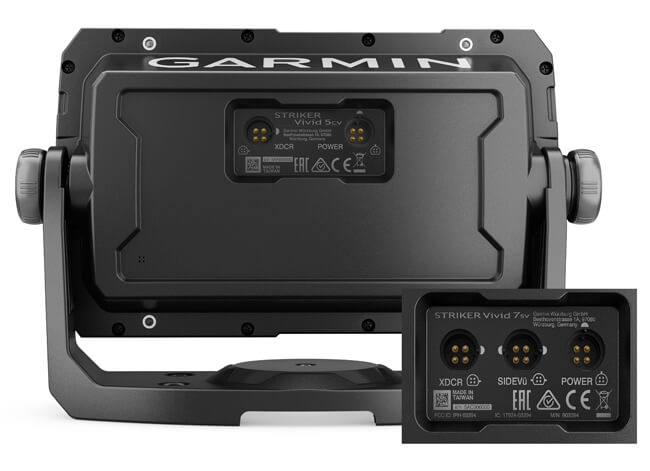
- The cable connections lack substantial strain relief.
- The capable GT52HW-TM transducer on the SV models operates through an adapter solution.
- GPS, waypoints, and Quickdraw are helpful, but there is no full-featured chartplotter—especially at 7 and 9 inches, this is a deliberate limitation.
That does not mean you cannot navigate with the Striker. It means that anyone who needs commercial charts, large-body-of-water planning, networking, or future expansion from the outset should consider the platform before buying, not after installation.
Do the seven new color palettes really help when reading sonar?
Garmin says the palettes address different lighting conditions, bottom composition, and individual viewing preferences. In practice, this means that what is easy to read over bright sand, in sunlight, or in shallow water may not be the best choice over a dark bottom or in diffuse light.
Compared with the Striker Plus family, the display appears to have greater contrast and look subjectively sharper. This is particularly helpful when quickly scanning drop-offs or comparing several areas. The advantage is not that more suddenly happens underwater, but that you can identify and verify existing differences more quickly.
How good are CHIRP, ClearVü, and SideVü on the Striker Vivid?
What does traditional CHIRP sonar provide?
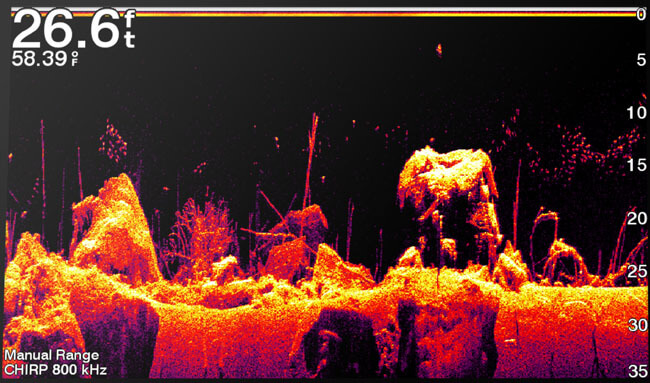
The Striker Vivid series uses CHIRP sonar, which Garmin has developed over the years with compatible transducers. In practice, it provides a clear view of the bottom line, differences in bottom hardness, possible fish signals, and target separation. For many anglers, this solid foundation is more important than a long list of features.
A good 2D image does not automatically make a fishing spot. But it helps you systematically compare one area with another: How does the depth change? Is there vegetation along the drop-off? Is bait holding above a hard transition? This leads to a better decision about where the next cast makes sense.
When is ClearVü or SideVü worthwhile?
ClearVü shows the area directly beneath the boat in a more image-like way than the traditional 2D display. Structures, wood, vegetation, and bottom contours are often easier to interpret. All Vivid models support ClearVü when used with the appropriate transducer.
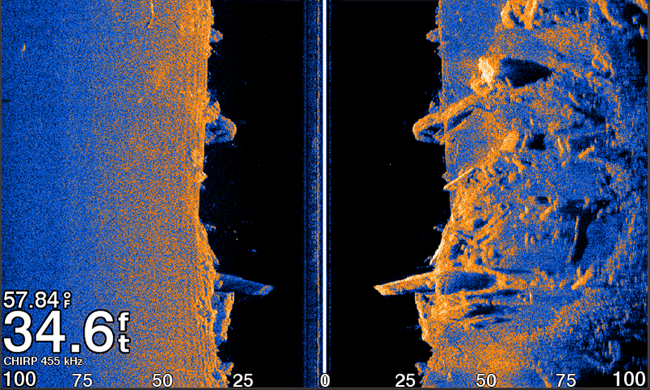
SideVü on the SV models extends the view to the left and right of the boat. This is particularly valuable for systematic searching: You do not have to pass directly over an interesting line, vegetation edge, or shadow to notice it. Then the real work begins: Mark the area, inspect it again from another direction, and relate it to depth, the map, and signs of bait.
Can Garmin Striker Vivid replace a chartplotter with GPS and Quickdraw?
With Quickdraw Contours, the device records its own depth contours as you travel. The maps are saved, can be used via Wi-Fi and ActiveCaptain, and help you return to notable areas. On smaller or poorly mapped waters, this adds real value: Individual trips gradually build a picture of drop-offs, holes, plateaus, and channels.
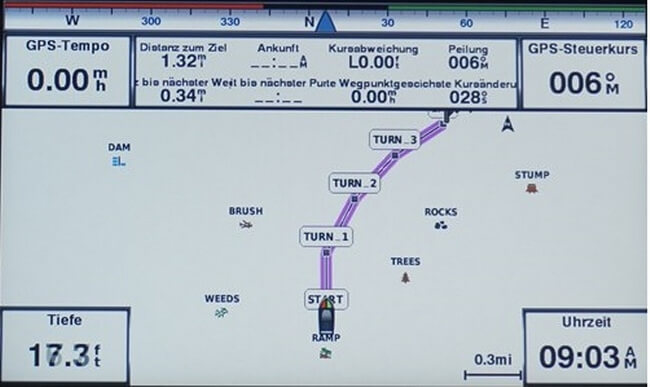
When it comes to navigation, it is important to be honest: The display helps you follow a route and return to hotspots. However, it does not provide the same planning capabilities and safety as a chartplotter. Anyone planning to fish large lakes, unfamiliar waters, or more complex boating routes should not downplay this limitation.
Which transducer suits the CV and SV models?
The transducer largely determines what information the display can show at all. This is especially important with the Striker Vivid because the devices are offered in different packages and sometimes without a transducer.
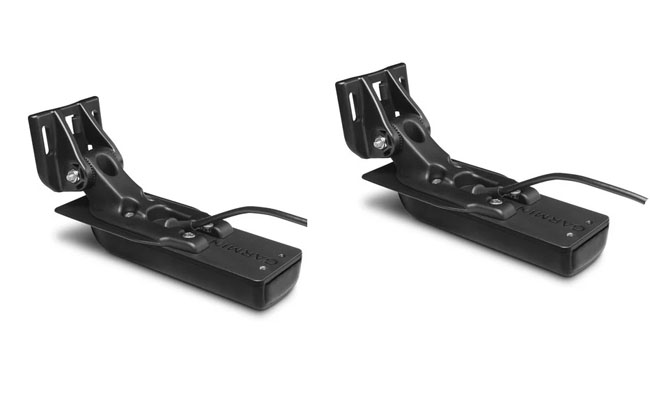
- GT22HW-TM: for CV setups with 2D CHIRP and ClearVü.
- GT52HW-TM: for SV setups with 2D CHIRP, ClearVü, and additional SideVü.
- GT20: is used in some packages. It is not worthless, but it makes less use of the series' CHIRP capabilities than the specialized alternatives.
The practical takeaway is simple: Do not just look for “Striker Vivid 7.” Check whether you are buying a cv or sv model, which transducer is included, and whether that particular viewing angle suits the way you search. Anglers who scan large areas for structure should not treat SideVü as a minor extra; those who primarily read what is directly beneath the boat can go very far with a good CV setup.
Which Garmin Striker Vivid models are available—and how do they differ?
| Model | Display | Sonar | Who is it for? |
|---|---|---|---|
| Striker Vivid 4cv | 4.3 inches · 272 × 480 pixels | 2D CHIRP, ClearVü | Very compact, simple setups |
| Striker Vivid 5cv | 5 inches · 800 × 480 pixels | 2D CHIRP, ClearVü | Small boat, kayak, limited space |
| Striker Vivid 7cv | 7 inches · 800 × 480 pixels | 2D CHIRP, ClearVü | Better overview beneath the boat |
| Striker Vivid 7sv | 7 inches · 800 × 480 pixels | 2D CHIRP, ClearVü, SideVü | The most versatile entry point for scanning broad areas |
| Striker Vivid 9cv | 9 inches · 800 × 480 pixels | 2D CHIRP, ClearVü | Large display without side imaging |
| Striker Vivid 9sv | 9 inches · 800 × 480 pixels | 2D CHIRP, ClearVü, SideVü | Plenty of display area for SideVü and split-screen views |
The original model overview lists 300 watts RMS for the smaller devices and 500 watts RMS for the others. All feature GPS, Quickdraw Contours, Wi-Fi, ActiveCaptain compatibility, and button controls. None has an SD card slot, touchscreen, full-featured chartplotter, or network connection. This clear distinction is not a disadvantage if it suits your use—but it is crucial if you want a system that can grow with your needs.
Current note: Display-only and transducer packages may vary by market and retailer. The core technical features in this review refer to the Vivid versions covered in the original comparison; always check the current package description from Garmin or the retailer before buying.
Conclusion: Who is Garmin Striker Vivid right for today?
Striker Vivid remains near the top of the entry-level to midrange device class if you want CHIRP, ClearVü, and, on the SV models, SideVü in a straightforward system. The additional color palettes visibly improve the display, but the underlying sonar technology builds on the already proven Striker Plus series.
For Striker Plus owners, switching was therefore not an essential upgrade. For a new purchase, Vivid can still be a sensible package: straightforward operation, useful GPS, custom depth maps, and with the 7sv or 9sv, a serious view to the sides of the boat.
If you expect to use chart planning, fish large bodies of water, add networking, or upgrade to live sonar later, compare the series with the current options in the fish finder review beforehand. If you first want to properly learn what the bottom, drop-offs, vegetation, and notable areas look like, a Striker Vivid with a good transducer is a very useful starting point. After that, the display does not make the decision for you—what matters is how well you translate what you see into better fishing spots.