
UNDERSTANDING WATERS · CANAL
Where Do Fish Find Structure and Cover in a Canal?
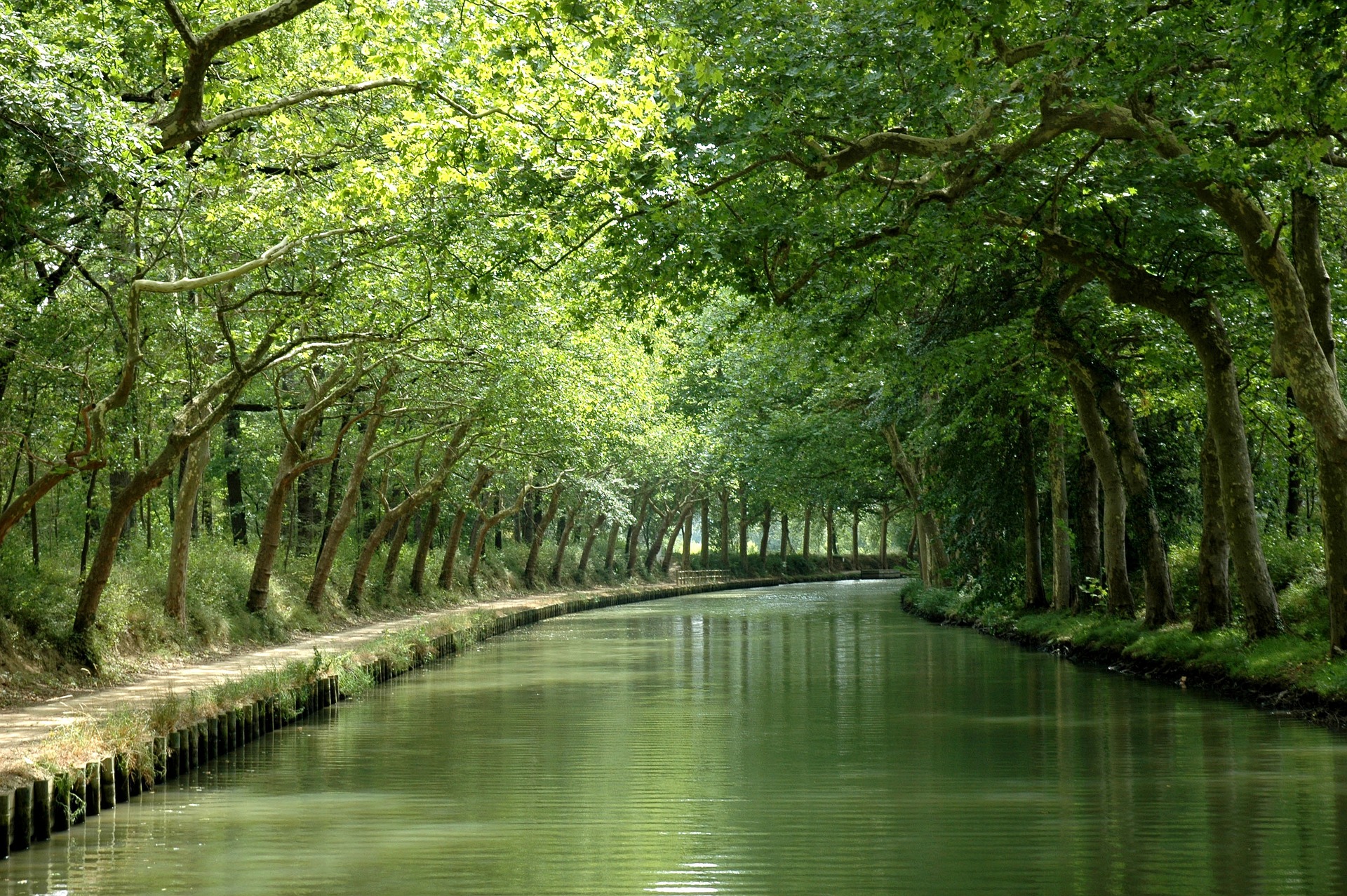
How Does a Canal Differ From a River When Fishing?
Many canals have reinforced banks, a more predictable width, and few visible bays. That does not mean they lack structure. Their structure is often simply subtler and closer to the bank: quay walls, sheet piling, riprap, bridges, docks, harbors, locks, pipes, moorings, slopes, or stands of old trees. Underwater, there may also be small drop-offs, scoured areas, and hard transitions.
You also need to distinguish what kind of canal you are facing. A narrow, calm rural canal with weeds and overhanging trees fishes differently from a wide, busy waterway with sheet piling and changing water levels. So terms such as “canal” do not yet tell you where the fish are holding. They only tell you to take the few differences especially seriously.
The right first question is not: “Which lure color will catch fish today?” Instead, ask: Where can a fish find shelter, reach food, and hold without wasting energy? From there, the long stretch becomes a manageable search.
Which Canal Structures Should You Check First?
Why Is Sheet Piling More Than a Straight Edge?
Sheet piling forms a distinct bank line that often drops off quickly. Small projections, posts, pipes, shadows, scoured areas, or a transition to another type of construction can interrupt that line. The wall can offer baitfish orientation and protection. Predators can use the edge when prey moves along it or veers away from it. Do not fish only parallel and tight to the wall: check the base of the wall, the first few meters beside it, and distinctive places such as bends or installed structures.
What Makes a Bridge, Inflow, and Lock So Interesting?
Bridge piers, pipes, and inflows alter light, current, and the path of drifting material. A lock or its surroundings can affect water movement and water level; clear safety restrictions and fishing bans often apply there as well. The rule is: identify the structure, check the regulations, and do not simply fish the most obvious structure. The interesting area may be several meters before or beyond it, or on a calmer side.
Why Aren't Harbors and Moorings Automatic Hotspots?
In harbors and at moorings, drop-offs, shade, boats, ropes, entrances, and sometimes calmer zones come together. This can attract prey, but activity and fishing pressure can also displace fish. Treat the entrance, outside edge, first drop-off, and sheltered side as separate questions. Fishing bans, navigation rules, and private property always take precedence.
What Does Vegetation Add to a Straight Canal?
A weed bed, reeds, or overhanging vegetation interrupts the hard bank line. It can provide food and cover while creating a distinct edge with the open navigation channel. What matters is the edge, a gap, or the end of the vegetation—not trying to cast the lure into the thickest growth. The article Weeds and Plants as Hotspots will help you read this type of structure more precisely.
How Does Current Affect a Canal—and Where Can Fish Conserve Energy?
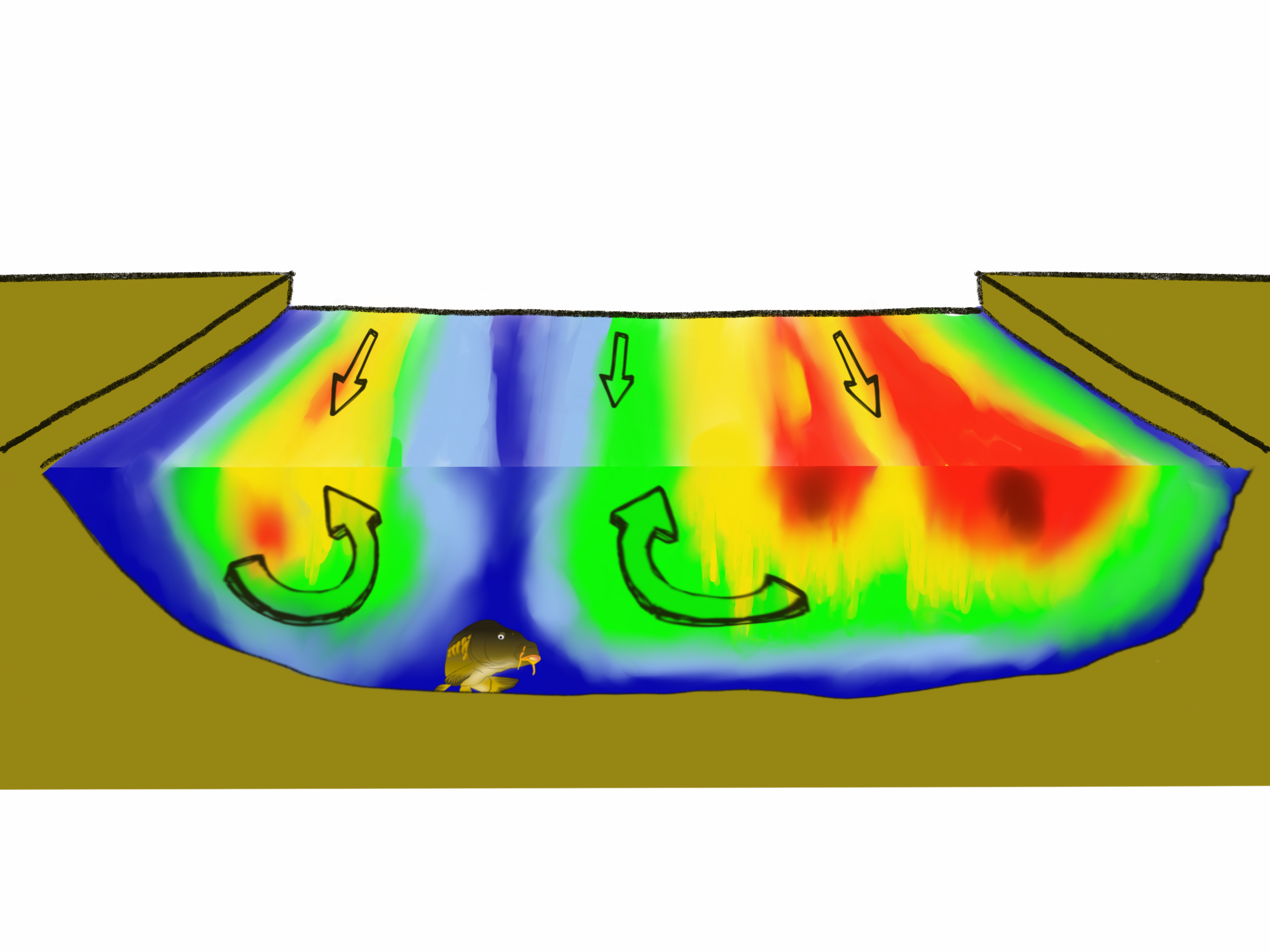
In a river, the main current is often permanently visible and shapes the channel, eddies, and outside bends. In a canal, the movement may be more uniform, weaker, or significantly altered at times. Entrances, lock operation, pumps, wind, and passing vessels can affect local conditions. Do not build a theory around this before observing the water.
Watch foam, leaves, fine particles, and the surface. Where does the water accelerate at an edge? Where does it become calmer behind a pier? Where does material collect? A favorable position for a fish can form where it holds in calmer water and can reach the more active flow with little effort. The combination of conserving energy and reaching food matters more here than whether the canal “has current.”
The illustration shows one possible pattern of movement, not a measurement of your water. Use it as a thinking tool: water can behave differently in various layers and near the banks. Confirm the hypothesis through observation, depth sounding, or a controlled cast.
Where Do You Find Prey Before Your Target Fish in a Canal?
A canal can look empty at first glance. Even so, spend a few minutes watching the surface before fishing. Small fish, fleeing prey, insects, birds taking flight, moving vegetation, or a clearly defined shadow do not guarantee a catch, but they give you direction. A single splash in the middle of the navigation channel is less meaningful than repeated activity near structure.
Prey often does not use a canal uniformly. It may move along sheet piling, seek shelter in a harbor entrance, hold on a weed edge, or find food from an inflow. A predator does not have to be in the middle of the prey. It may wait at the edge, below the drop-off, or along the next interception line. The key is: watch the prey, then consider its likely route.
Carp and other nonpredatory fish may also use structured bank areas differently from predators. Soft bottom, plant debris, quiet corners, and natural food can all play a role. The spot is not good because “food always moves along a canal,” but because structure and food genuinely come together.
What Does Canal Structure Mean for Perch, Zander, Pike, and Carp?
Perch may hunt baitfish along drop-offs, posts, harbor edges, or weed lines. Test the shade and open side as well as the structure itself. For seasonal patterns and hotspots, continue with Fishing for Perch.
Zander may use hard transitions, channels, the edge of a current zone, and areas with accessible prey. That does not mean every meter of sheet piling is a zander spot. The zander articles will help you apply the location question to retrieve style and depth: Fishing for Zander.
Pike may hold near vegetation, shade, a calmer pocket, or the edge of a prey route. In a canal, the combination of cover and a short attack route matters more than depth alone. To apply this to flowing water, see Finding Pike in Rivers.
Carp may search for natural food in calm, structured areas near the bank. Soft bottom, plants, inflows, and sheltered areas are not automatically “carp spots”; you need to confirm them on the specific canal. Bait and rig selection come only after choosing the spot.
How Do You Turn a Long Canal Into Three Useful Test Areas?
- Area A—hard bank edge: Choose sheet piling, riprap, or a slope with a visible bend, shadow, or installed structure. Check the base of the wall and the first few meters of open water beside it.
- Area B—structural transition: Look for a bridge, harbor entrance, the end of a weed bed, an inflow, or the transition from a wall to a natural bank. Before casting, describe the function you expect it to serve.
- Area C—prey plus slack water: Watch for baitfish, vegetation, or calmer water. Do not fish randomly into the school; target the next interception line.
Fish each area with enough focus to draw a conclusion. Change the angle and depth first rather than immediately changing the lure every time. From the bank, a cast parallel to the sheet piling can keep the lure in the right zone for a long time. An angled cast shows whether a slope or drop-off lies beside the wall. Deliberately retrieve slowly or quickly enough to understand your contact with the bottom and structure.
How Do You Fish Canal Structure Without Writing Off the Spot After One Cast?
At sheet piling, a lure that drops straight to the bottom after landing may quickly leave the relevant depth. So try a parallel path, a shallower angle, or a retrieve just above the bottom. At the end of a weed bed, test along the edge, through the gap, and on the side facing the open navigation channel. At an inflow, first observe the movement and then fish the slack edge, not necessarily the strongest turbulence.
In a canal too, the lure is a tool for testing the water. Controlled hops can show whether the lure tracks cleanly along a drop-off or at the base of the wall and whether you can feel the bottom transition. Too much weight, frantic hops, or an overly steep casting angle can instead cause you to skip over the actual zone.
Keep the spot quiet. A few clean casts reveal more than constant splashing, repositioning, and walking. Especially along confined bank lines, unnecessary disturbance can push prey and target fish tighter to cover or make the area harder for you to read.
Which Mistakes Make Canal Fishing Unnecessarily Difficult?
- “The entire sheet-piled wall is a spot.” Look for bends, shadows, installed structures, bottom transitions, and junctions.
- “Canals have no current.” Observe instead of assuming: wind, inflows, locks, and vessel traffic can change the situation.
- “A harbor automatically means fish.” Activity, regulations, and fishing pressure can make the area unusable. Check the outside and the transition.
- “The lure needs to go deeper.” First check whether you have actually fished the base of the wall, the open side, and the drop-off separately.
- “I'll find some way to reach the water.” Reinforced banks, locks, and vessel traffic require keeping your distance and following clear rules. Safety and local regulations come first.
A canal rarely offers one obvious spot. That is precisely what makes it interesting: You have to find the small deviation, understand its function, and then fish it effectively. That turns a long, straight waterway into a logical fishing plan.